On this page
- What Are AI Agent Frameworks, and Why Do They Matter Now?
- Quick Comparison: OpenClaw vs Claude Managed Agents vs OpenAI Agents SDK
- Side-by-Side Feature Comparison
- When to Pick OpenClaw
- When to Pick Claude Managed Agents
- When to Pick OpenAI Agents SDK
- Pricing Comparison
- So Which One Should You Actually Use?
- Frequently Asked Questions
The AI agent landscape in 2026 is overwhelming. Every major lab ships an agent framework. Anthropic renamed Claude Code SDK to Claude Agent SDK and launched Managed Agents. OpenAI just updated its Agents SDK with sandboxing and a model-native harness. And OpenClaw has gone viral as the open-source alternative that runs on your own hardware.
If you are a developer, founder, or team lead trying to pick the right framework, this guide cuts through the noise. I have used all three in production, and I will tell you exactly when each one is the right call.
What Are AI Agent Frameworks, and Why Do They Matter Now?
An AI agent framework is software that lets large language models take actions autonomously — reading files, running commands, sending emails, calling APIs — rather than just generating text. The framework handles the agent loop (think, act, observe), tool execution, memory, security guardrails, and multi-agent coordination. In 2026, agent frameworks are the difference between a chatbot that talks and an AI that actually does work for you.
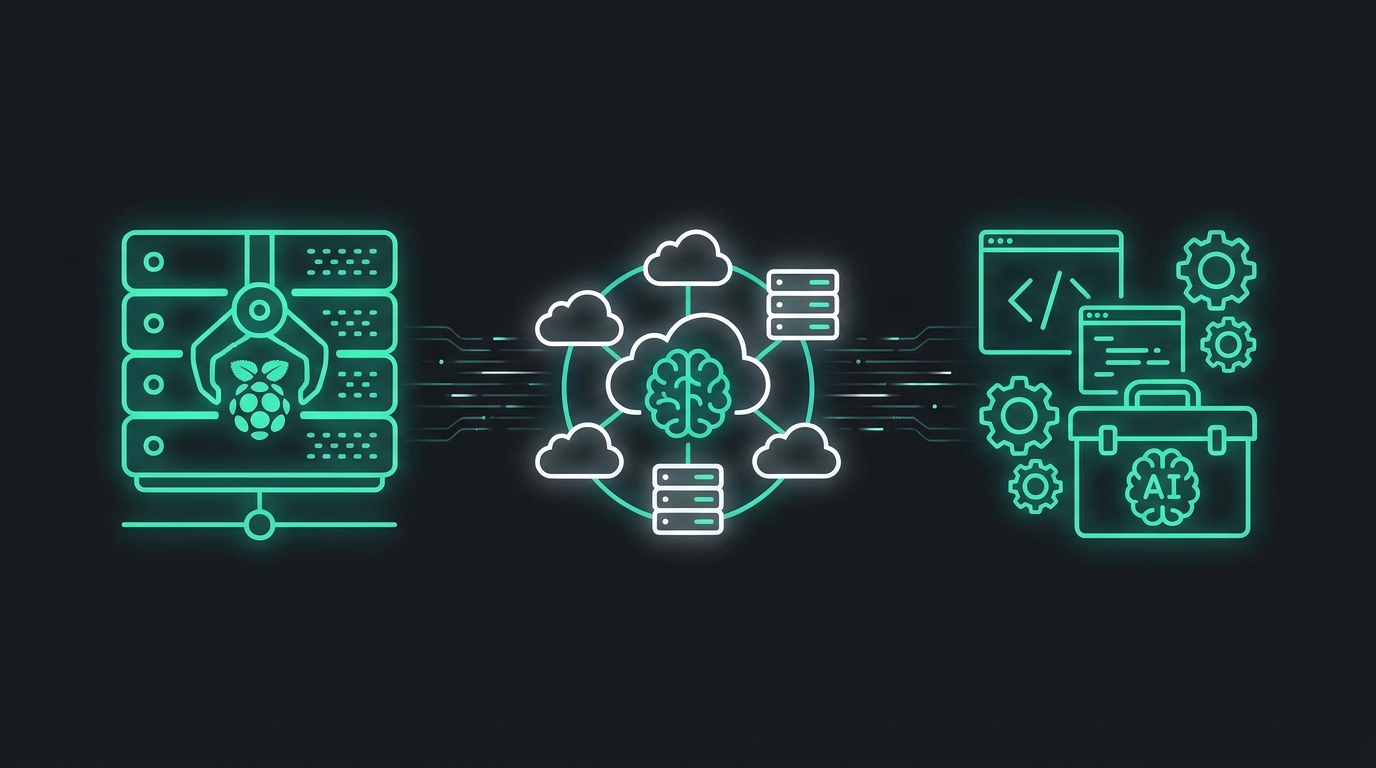
The three platforms covered here represent three fundamentally different philosophies: open-source self-hosting (OpenClaw), managed cloud infrastructure (Claude Managed Agents), and provider-native SDK primitives (OpenAI Agents SDK).
Quick Comparison: OpenClaw vs Claude Managed Agents vs OpenAI Agents SDK
OpenClaw is a free, open-source (MIT) self-hosted gateway that connects your messaging apps (Telegram, WhatsApp, Discord, Slack, Signal, iMessage, and 15+ more) to AI agents running on your own hardware. It is designed as a personal AI assistant platform with multi-channel routing, skills, memory, cron scheduling, and sub-agent spawning. You control everything — your data stays on your machine.
Claude Managed Agents (beta, April 2026) is Anthropic's fully managed agent runtime. You define an agent (model, prompt, tools, MCP servers), configure a cloud container environment, and launch sessions. Anthropic runs the infrastructure — the agent loop, sandbox, file system, and tool execution all happen in their managed environment. It is the simplest path to a production agent if you are committed to Claude models.
OpenAI Agents SDK is a lightweight, provider-native Python/TypeScript SDK for building multi-agent systems that run on OpenAI models. Its April 2026 update added a model-native harness (file operations, code execution, shell access) and native sandboxing with support for seven providers (E2B, Modal, Cloudflare, Daytona, Runloop, Vercel, and Blaxel). The SDK emphasises explicit handoffs between agents, guardrails, and built-in tracing.
Side-by-Side Feature Comparison
Hosting and deployment
OpenClaw runs on your own hardware — a laptop, a VPS, a Raspberry Pi, anything with Node.js. There is no cloud dependency, no vendor lock-in, and no usage fees beyond your LLM API costs. Claude Managed Agents runs entirely in Anthropic's cloud infrastructure — you never see the container, you just configure and launch. OpenAI Agents SDK runs wherever you deploy it, with the new sandbox providers handling isolated execution environments.
Multi-channel support
OpenClaw is the clear winner here with 20+ messaging channels supported out of the box — Telegram, WhatsApp, Discord, Slack, Signal, iMessage, Google Chat, Microsoft Teams, Matrix, and more. Claude Managed Agents and OpenAI Agents SDK have no built-in messaging integration — you build that layer yourself.
Model flexibility
OpenClaw is model-agnostic — it works with any LLM provider. Claude Managed Agents is locked to Claude models (Opus, Sonnet, Haiku). OpenAI Agents SDK is optimised for OpenAI models but technically supports any OpenAI-compatible API endpoint, plus 100+ LLMs through its provider-agnostic mode.
Tool and MCP support
All three support the Model Context Protocol (MCP) for standardised tool access. Claude Managed Agents has the deepest MCP integration — Anthropic built MCP and it shows. OpenClaw supports MCP servers natively. OpenAI Agents SDK adopted MCP across its products in early 2026.
Multi-agent orchestration
OpenClaw uses sub-agent spawning — isolated sessions with their own context, tools, and workspace. Claude Managed Agents has multi-agent support in research preview (April 2026). OpenAI Agents SDK uses explicit handoffs — clean, typed agent-to-agent delegation that is the simplest orchestration model in the ecosystem.
Security and isolation
OpenClaw runs on your machine with your security boundaries. Claude Managed Agents provides managed containers with network access rules and sandboxed tool execution. OpenAI Agents SDK's new sandboxing lets agents run in controlled environments with file-level permissions and supports durable execution through snapshotting and rehydration.
When to Pick OpenClaw
Choose OpenClaw when you want a personal AI assistant that lives on your hardware and is reachable from anywhere. It is ideal for developers and power users who want to message their AI from Telegram, WhatsApp, or Discord and have it autonomously handle tasks — reading files, running scripts, sending emails, managing calendars, monitoring systems — all while keeping data on their own machine.
OpenClaw shines for solo operators and small teams who need a 24/7 agent connected to their messaging stack. The skills system (with a growing community library at clawhub.ai), memory management, cron scheduling, and multi-agent routing make it surprisingly powerful for business operations — lead management, content creation, outreach automation, and monitoring.
The trade-off: you manage your own infrastructure. If your server goes down, your agent goes down. You also need some technical comfort with Node.js, environment setup, and API keys.
Best for: Developers, solopreneurs, small teams wanting a self-hosted AI assistant that connects to their existing messaging apps. Budget-conscious builders who want maximum control.
When to Pick Claude Managed Agents
Choose Claude Managed Agents when you want to ship a production agent without building any infrastructure. You define the agent's model, prompt, and tools, configure a cloud container, and launch. Anthropic handles the agent loop, tool execution, sandboxing, session persistence, and compaction.
This is the fastest path from idea to deployed agent if you are committed to Claude models. The built-in tools (Bash, file operations, web search, MCP servers) mean you can build capable agents with minimal code. The managed environment handles long-running tasks, and you can steer or interrupt agents mid-execution.
The trade-off: you are locked into Claude models and Anthropic's infrastructure. There is no messaging layer built in. The multi-agent and memory features are still in research preview. And because it is managed, you pay for the convenience.
Best for: Teams building production agents on Claude who want zero infrastructure management. Customer support bots, research agents, data processing pipelines, and any long-running autonomous task where you want Anthropic to handle the runtime.
When to Pick OpenAI Agents SDK
Choose OpenAI Agents SDK when you need lightweight, explicit multi-agent coordination. The handoff model — where Agent A delegates to Agent B through typed tool calls — is the cleanest in the ecosystem. Combined with three-tier guardrails (input, output, tool) running in parallel, it is purpose-built for agent pipelines where control flow matters more than deep tool integration.
The April 2026 update made it significantly more capable. The model-native harness brings file operations, code execution, and shell access. Native sandboxing with seven providers gives you flexibility in how you isolate agent execution. The Manifest abstraction makes environments portable from local development to production.
The trade-off: it is still a thin SDK, not a managed platform. You build the hosting, persistence, and messaging layers yourself. Handoffs are linear chains, not arbitrary graph topologies (use LangGraph for that). TypeScript support is still catching up to Python.
Best for: Developers building multi-step agent pipelines with clear delegation patterns. Customer service routing, content triage systems, data processing workflows where Agent A hands off to Agent B or Agent C based on guardrails.
Pricing Comparison
OpenClaw is free and open-source (MIT license). You only pay for your LLM API usage — typically $20-200/month depending on model choice and volume. No per-seat fees, no platform fees.
Claude Managed Agents uses standard Anthropic API pricing based on tokens and tool use. A typical agent session running Sonnet with moderate tool use costs $0.50-5.00 per session. Long-running tasks with Opus can cost significantly more. You pay for the convenience of managed infrastructure.
OpenAI Agents SDK is also just API pricing — you pay for tokens and tool use through OpenAI's standard rates. Sandbox providers (E2B, Modal, etc.) charge separately for compute. There is no SDK licensing fee.
So Which One Should You Actually Use?
Here is the honest answer based on real-world use:
If you are a solo developer or small team who wants an always-on AI assistant connected to your messaging apps — OpenClaw. Nothing else gives you multi-channel messaging, self-hosting, skills, memory, and cron scheduling in a free, open-source package. You will spend a Saturday setting it up, and then it just runs.
If you are a product team building an agent-powered feature or service on Claude — Claude Managed Agents. The zero-infrastructure approach and deep MCP integration mean you ship faster. Accept the model lock-in as the price of velocity.
If you are an engineering team building multi-agent systems with explicit handoff patterns — OpenAI Agents SDK. The guardrails, tracing, and clean delegation model are purpose-built for this. Pair it with your own hosting and persistence layer.
And if none of these fit perfectly? That is normal. The agent ecosystem is still early. Many teams end up combining approaches — OpenClaw for the personal assistant layer, Claude Managed Agents for production workloads, and OpenAI's SDK for specific pipeline orchestration. The good news: all three support MCP, so tools and data can flow between them.
Frequently Asked Questions
Can I use multiple agent frameworks together?
Yes. All three platforms support the Model Context Protocol (MCP), which provides a standardised way for agents to access tools and data. You can run OpenClaw for messaging and personal tasks while using Claude Managed Agents for heavy processing workloads.
Is OpenClaw really free?
OpenClaw itself is free and open-source under the MIT license. You still pay for LLM API access (OpenAI, Anthropic, or any other provider). Typical costs are $20-200/month for a personal assistant depending on usage.
What is the difference between Claude Agent SDK and Claude Managed Agents?
Claude Agent SDK (formerly Claude Code SDK) is a library you embed in your own application — you run the agent loop on your infrastructure. Claude Managed Agents is a fully managed service where Anthropic runs the entire agent runtime in their cloud. The SDK gives you control; Managed Agents gives you convenience.
Is OpenAI Agents SDK only for OpenAI models?
The SDK is optimised for OpenAI models but supports any OpenAI-compatible API endpoint. The April 2026 update added provider-agnostic support for over 100 LLMs, though the deepest integration and best performance is with GPT-4o and o3.
Which framework is best for a solo developer on a budget?
OpenClaw. It is free, self-hosted, model-agnostic (use the cheapest model that works), and includes 20+ messaging channels out of the box. No other option gives you that much capability at zero platform cost.
One email a month, no noise
Practical AI notes for Australian businesses. Unsubscribe anytime.