On this page
- What Is Alibaba Open Code Review?
- Why General-Purpose Coding Agents Fail at Code Review
- Inside the Hybrid Architecture: Deterministic Pipelines Plus an LLM Agent
- How Smart File Bundling Tames Large Changesets
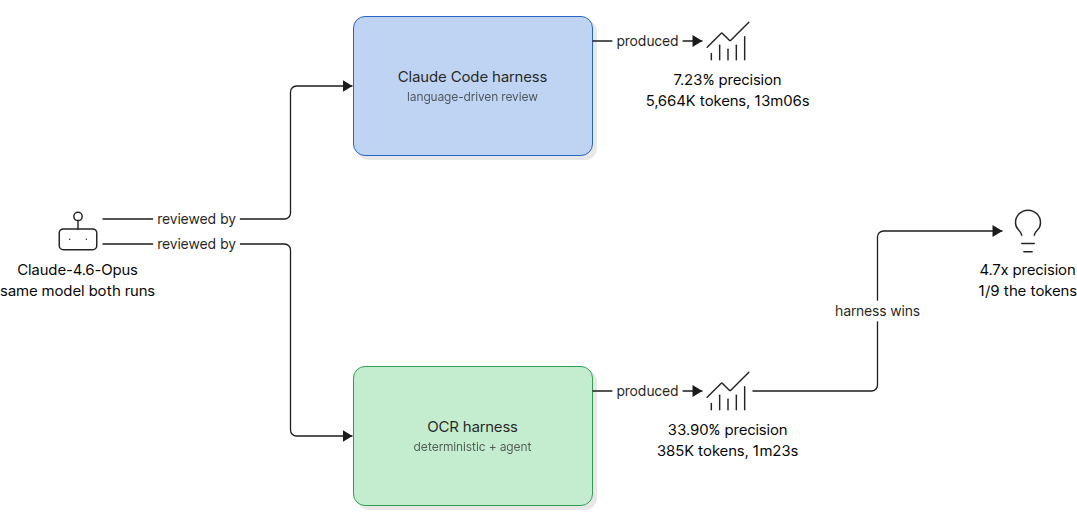
- AACR-Bench: Same Model, 4.7x Precision, One Ninth the Tokens
- We Tested It: A 13-Second Install and a Live Rule Match
- How to Start Using Open Code Review
- Open Code Review vs CodeRabbit, Greptile, and GitHub Copilot
- The Verdict: The Harness Beats the Model
Last Updated: September 12, 2026
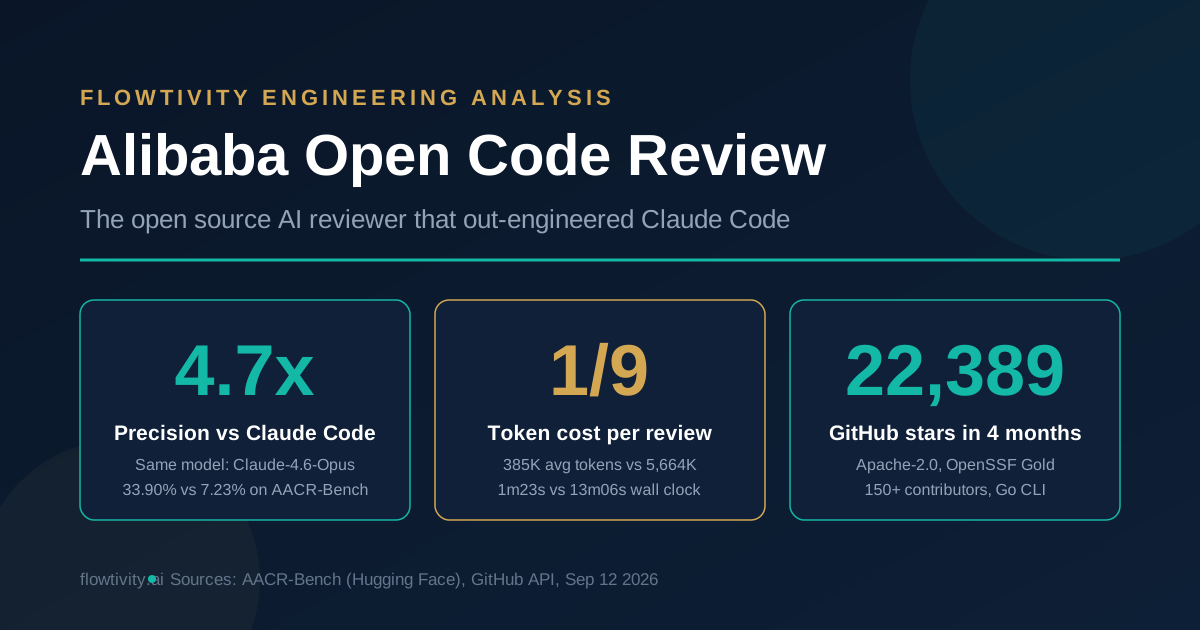
Alibaba's Open Code Review, the Apache-2.0 licensed CLI incubated inside Alibaba Group and spotlighted by Chris Short's DevOps'ish newsletter this week, reviewed the same 200 pull requests as Claude Code using the same underlying model, and the results were not close. According to the project's AACR-Bench benchmark published on Hugging Face, Open Code Review paired with Claude-4.6-Opus hit 33.90 percent precision versus 7.23 percent for Claude Code running the identical model, a 4.7x gap, while consuming 385K tokens per review instead of 5,664K. The repository has gathered 22,389 GitHub stars in under four months. The tool runs as a terminal command, a CI step, or a plug-in inside Claude Code, Codex, and Cursor, and it accepts any OpenAI or Anthropic compatible endpoint. The bigger lesson for engineering teams: the harness around a model matters more than the model itself.
What Is Alibaba Open Code Review?
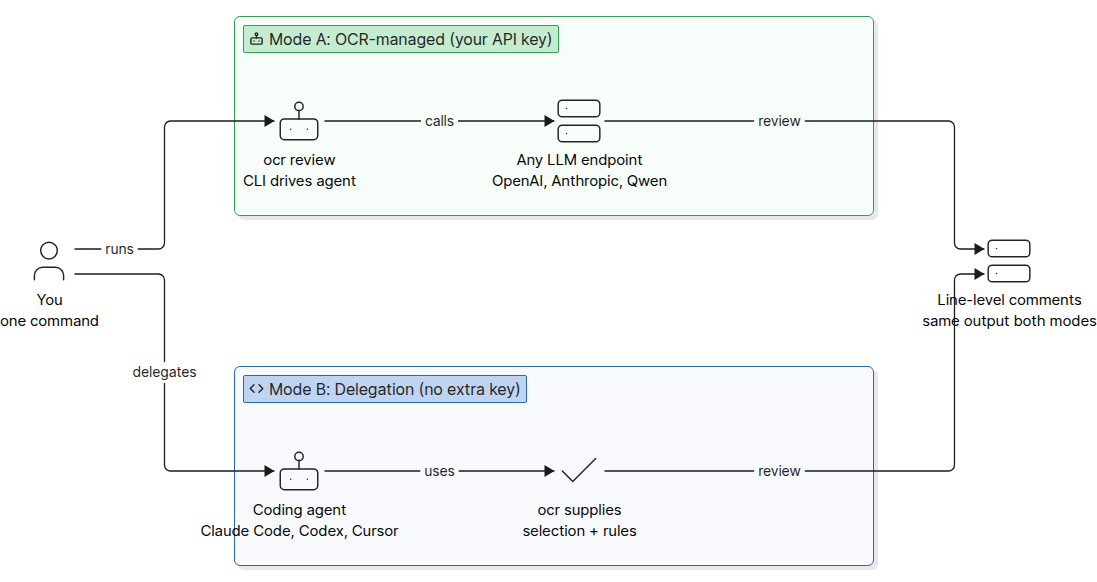
Open Code Review, invoked as ocr, is a free, open source AI code review CLI that Alibaba built and ran internally for two years before open sourcing it in May 2026. It reads Git diffs, sends the right files to an LLM agent with tool access, and returns structured comments pinned to exact lines. Installation is one npm command.
"Battle-tested at Alibaba's scale," says Chris Short, author of the DevOps'ish newsletter, who shared the project with his readers on September 11, 2026. The claim has receipts. According to the project README, the internal version served tens of thousands of developers, identified millions of code defects, reached more than 30 percent adoption inside Alibaba, and executed over 1 million real-world review tasks. According to the GitHub repository API as of September 12, 2026, the open source repo shows 22,389 stars, 1,665 forks, roughly 150 contributors, and an OpenSSF Gold badge, with releases shipping every few days, v1.11.9 arrived on September 11. Built-in rulesets target NPE risks, thread-safety, XSS, and SQL injection across 10 programming languages.
Why General-Purpose Coding Agents Fail at Code Review
General-purpose agents like Claude Code underperform at review for three documented reasons: incomplete coverage on large changesets, position drift where reported line numbers miss the real code, and unstable quality where minor prompt changes swing results. The root cause is architectural. A purely language-driven review has no hard constraints, so every run is a fresh improvisation.
The project's README names all three failure modes explicitly. The benchmark quantifies the noise: in benchmark runs, Claude Code raised between 4,351 and 5,980 findings per pass across configurations, while Open Code Review raised 728 to 889. Reviewers stop trusting a bot that cries wolf 90 percent of the time. Precision is the metric that decides whether humans actually read AI comments, which is why the project optimizes for it deliberately.
Inside the Hybrid Architecture: Deterministic Pipelines Plus an LLM Agent
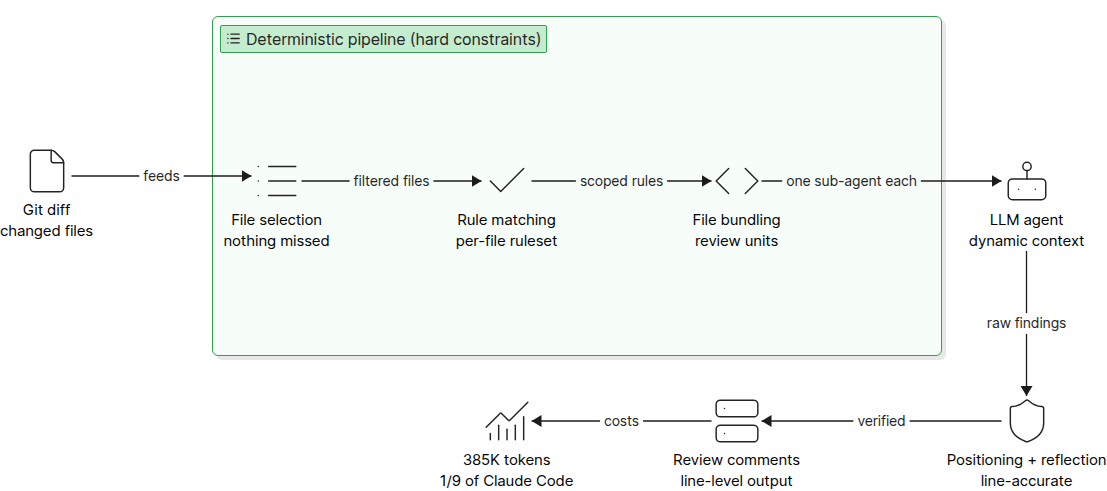
Open Code Review splits the review into a deterministic pipeline that handles what must never go wrong and an agent that handles judgment. Engineering logic guarantees exact file selection, template-based rule matching, and file bundling. The LLM agent then reads full files, searches the codebase, and inspects related changes. Independent positioning and reflection modules verify both the location and the content of every comment before it is posted.
The rulesets are the quiet differentiator. We inspected the built-in Go ruleset, and it reads like a senior reviewer's checklist: ignored errors, typed nils in interfaces, sync.Mutex copies, goroutines that outlive their owner, and a security section covering SQL assembled from untrusted input. "Favor precision over recall: report only defects that are likely real in the changed code and its reachable context. A false positive costs reviewer trust," the Go ruleset instructs. It even tells the agent not to re-report what go vet and Staticcheck already catch. That philosophy, hard-coded into the template layer rather than wished for in a prompt, is what stabilizes output.
How Smart File Bundling Tames Large Changesets
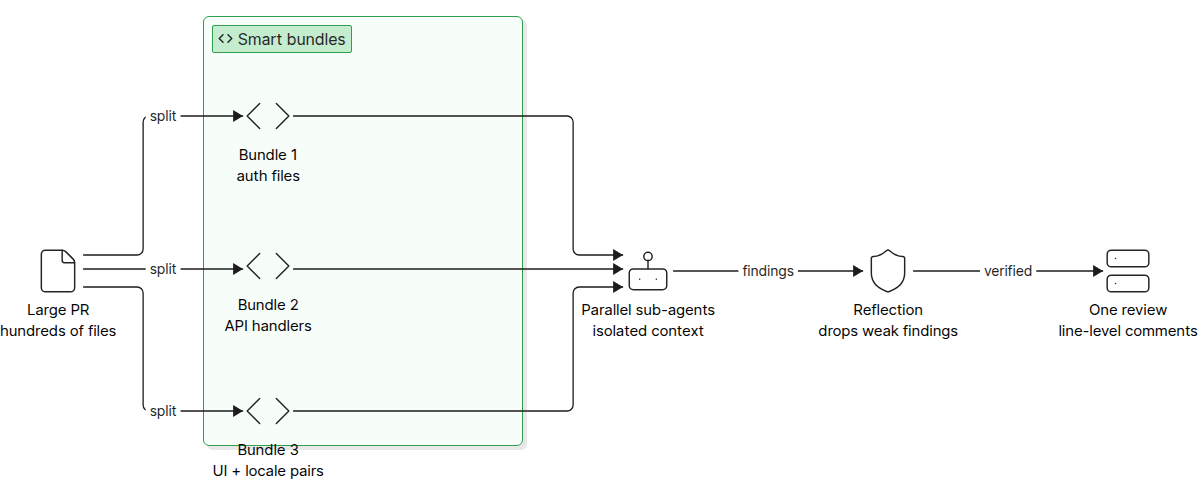
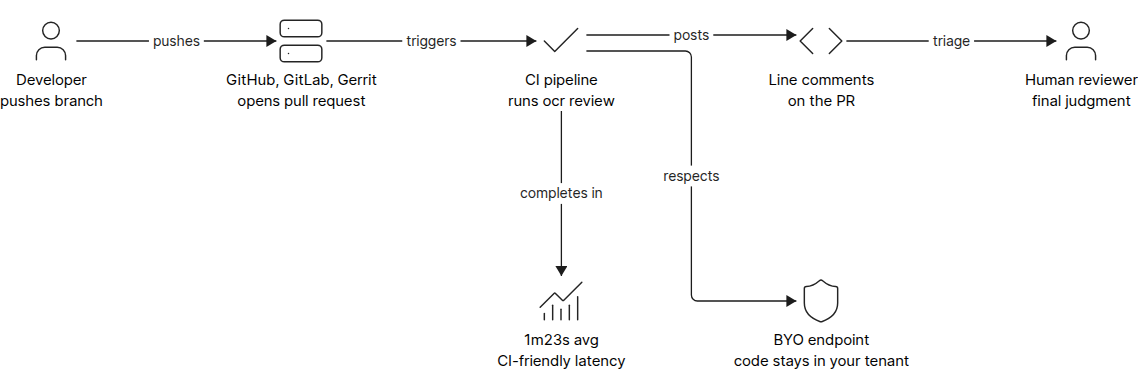
Large pull requests break single-context agents because the model's attention thins out. Open Code Review groups related files into bundles, for example pairing message_en.properties with message_zh.properties, and runs each bundle as an isolated sub-agent. The divide-and-conquer design stays stable on very large changesets and enables concurrent review, which is a big reason a full review averaged 1 minute 23 seconds in the benchmark.
AACR-Bench: Same Model, 4.7x Precision, One Ninth the Tokens
AACR-Bench is a public benchmark built from 50 popular open source repositories, 200 real pull requests, and 10 programming languages, cross-validated by more than 80 senior engineers against 1,505 annotated ground-truth issues. On it, Open Code Review with Claude-4.6-Opus scored an F1 of 25.10 percent versus 11.57 percent for Claude Code with the same model, completed reviews 9.4x faster, and spent roughly one ninth of the tokens.
| Reviewer | Model | F1 | Precision | Recall | Avg time | Avg tokens |
|---|---|---|---|---|---|---|
| Open Code Review | Claude-4.6-Opus | 25.10% | 33.90% | 20.00% | 1m23s | 385K |
| Open Code Review | Qwen3.8-Max | 23.00% | 33.90% | 17.40% | 5m14s | 334K |
| Open Code Review | GPT-5.5 | 21.00% | 32.10% | 15.50% | 2m51s | 422K |
| Claude Code | Claude-4.6-Opus | 11.57% | 7.23% | 28.90% | 13m06s | 5,664K |
| Codex | GPT-5.5 | 8.36% | 27.82% | 4.92% | 2m58s | 525K |
Source: AACR-Bench results published with the project, September 2026. One honest caveat: Claude Code won raw recall, 28.90 percent versus 20.00 percent, because it fired off thousands of findings. If your workflow needs maximum sweep and you will triage manually, that trade-off may suit you. For teams where reviewer attention is the scarce resource, precision wins.
We Tested It: A 13-Second Install and a Live Rule Match
We installed Open Code Review on our Ubuntu server on September 12, 2026. The npm install finished in 13 seconds and produced the ocr CLI at version 1.11.9. We then created a two-file test repo containing a Go HTTP handler with string-concatenated SQL and a React component rendering dangerouslySetInnerHTML. Delegation preview correctly flagged 2 of 2 files as reviewable with 27 insertions. Delegation rule matched the full Go security ruleset, whose security section explicitly covers SQL assembled from untrusted input, plus the TypeScript and JavaScript rule group for the React file. No API key was required for either step.
How to Start Using Open Code Review
Setup takes under ten minutes. You need Git 2.41 or newer and either an OpenAI or Anthropic compatible API key, or a supported coding agent if you choose Delegation Mode. The steps below follow the project's quickstart documentation.
- Install:
npm install -g @alibaba-group/open-code-review - Configure:
ocr config providerthenocr config model. The interactive UI tests connectivity for you. - Review:
ocr reviewfor working changes,ocr review --from main --to feature-branchfor a branch,ocr scanto audit whole files, and--format json --output result.jsonfor pipelines. - Automate: add
ocr reviewto GitHub Actions, GitLab CI, or Gerrit using the documented recipes, or install the plug-ins for Claude Code, Codex, and Cursor.
Interrupted runs resume with ocr session list and --resume. A session viewer lets you browse past reviews and mark findings fixed or ignored. OpenTelemetry support exposes review latency and findings for dashboards.
Open Code Review vs CodeRabbit, Greptile, and GitHub Copilot
Open Code Review is the only Apache-2.0, self-hosted option in the top tier of AI reviewers. Greptile and CodeRabbit are capable SaaS products, but code leaves your perimeter and pricing scales per seat. GitHub Copilot's reviewer is convenient if you live entirely in GitHub. Open Code Review runs anywhere Git runs, against any compatible endpoint including on-prem models, which matters for regulated teams and cost-sensitive shops.
| Tool | License | Deployment | Model choice | Best for |
|---|---|---|---|---|
| Open Code Review | Apache-2.0 | Self-hosted CLI and CI | Any compatible endpoint | Control, cost, CI gates |
| Greptile | Proprietary | SaaS | Proprietary | Zero-setup teams |
| CodeRabbit | Proprietary | SaaS | Proprietary | PR triage workflows |
| GitHub Copilot review | Proprietary | GitHub-native | GitHub models | GitHub-only shops |
According to Greptile's homepage, more than 22,000 teams use its reviewer, including Nvidia, Zapier, and PostHog, which confirms the market's appetite. The competitive gap Open Code Review fills is openness: an AACR-Bench-grade reviewer you can run in your own CI, on your own endpoint, for the cost of your own tokens.
The Verdict: The Harness Beats the Model
AACR-Bench is the cleanest public evidence yet that agent engineering beats model shopping. The same Claude model went from a 7.23 percent precision firehose to a 33.90 percent precision reviewer purely by changing the harness around it, at one ninth of the cost. For growing teams watching AI-generated pull request volume climb, Open Code Review is a pragmatic addition: free, fast at 1m23s average, and vendor-neutral. Keep humans in the loop for the recall it deliberately trades away. As AI writes more of the world's code, review becomes the quality bottleneck, and the teams that industrialize it first will ship faster with fewer incidents.
One email a month, no noise
Practical AI notes for Australian businesses. Unsubscribe anytime.