
On this page
- What Is an AI Gateway and Why Do You Need One?
- What Is Experiential?
- How Do Spend Caps Actually Work?
- How to Set Up Experiential in 15 Minutes
- Can a Gateway Actually Cut Your AI Costs?
- Experiential vs DIY vs Scattered Keys
- Should You Put a Gateway in Front of Your Agents?
- Frequently Asked Questions About the Experiential Gateway
Last Updated: 22 September 2026
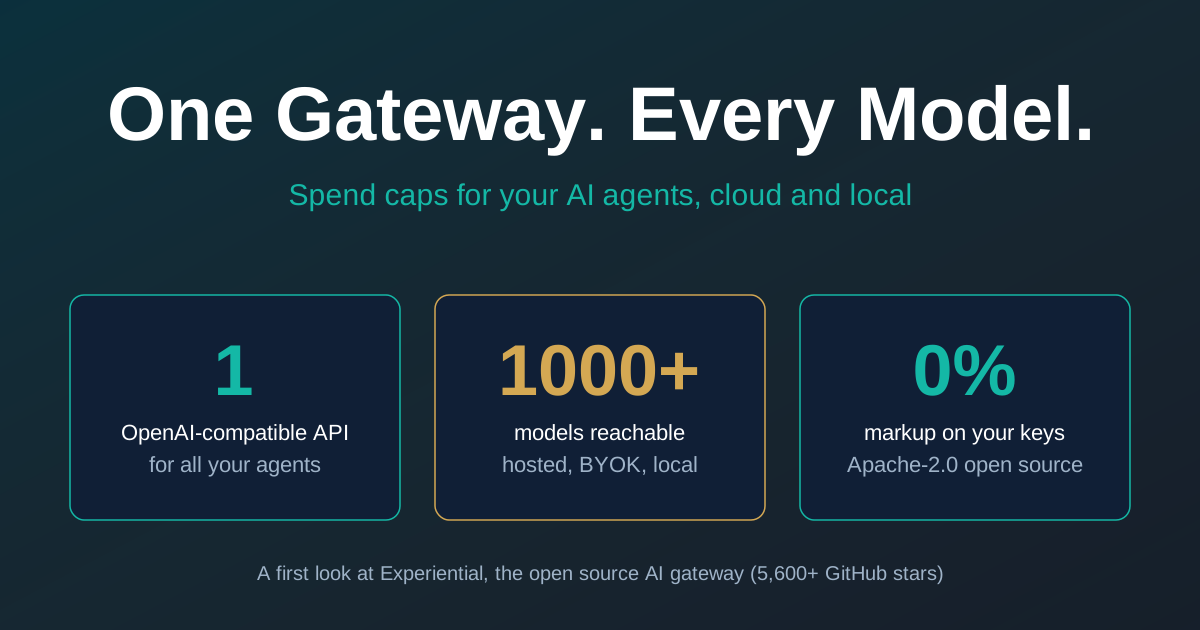
Yes, one router can control what your AI agents are allowed to spend, and the open source option is ready today. Experiential is an Apache-2.0 gateway that puts hosted, BYOK and local models behind a single OpenAI-compatible API, then issues keys with budgets by day, week or month, model allowlists and local-only scopes, so an agent cannot call a model or spend a dollar it is not allowed to. According to the GitHub repository, it launched in June 2026, has 5,600+ stars and charges zero markup on your own keys. The business case is built on a familiar pain: your agents multiply, each carries its own provider key, and the bill lands in a spreadsheet nobody owns. A gateway turns agent spend into a budget line you can cap before it caps you.
What Is an AI Gateway and Why Do You Need One?
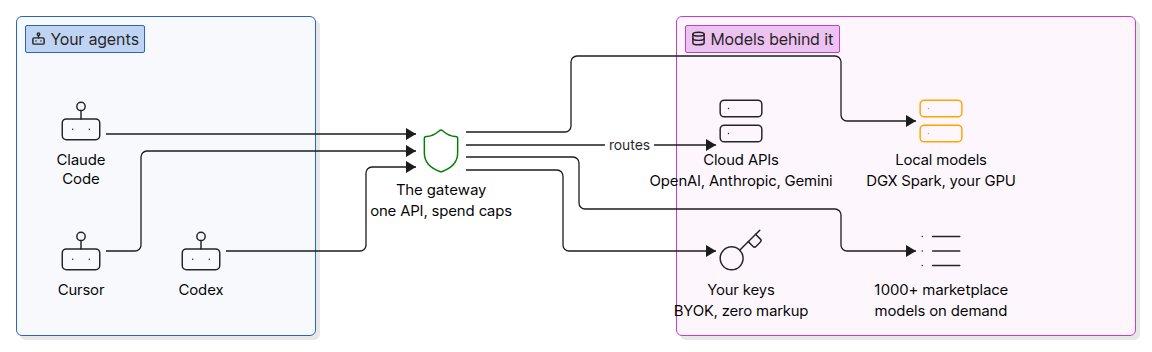
An AI gateway is a thin service that sits between your agents and every model provider, exposing one OpenAI-compatible API while handling keys, routing, fallbacks, budgets and logging. You need one the moment you run more than one coding agent against more than one provider, because that is when keys proliferate, invoices fragment and nobody can answer the simple question of what the agents cost.
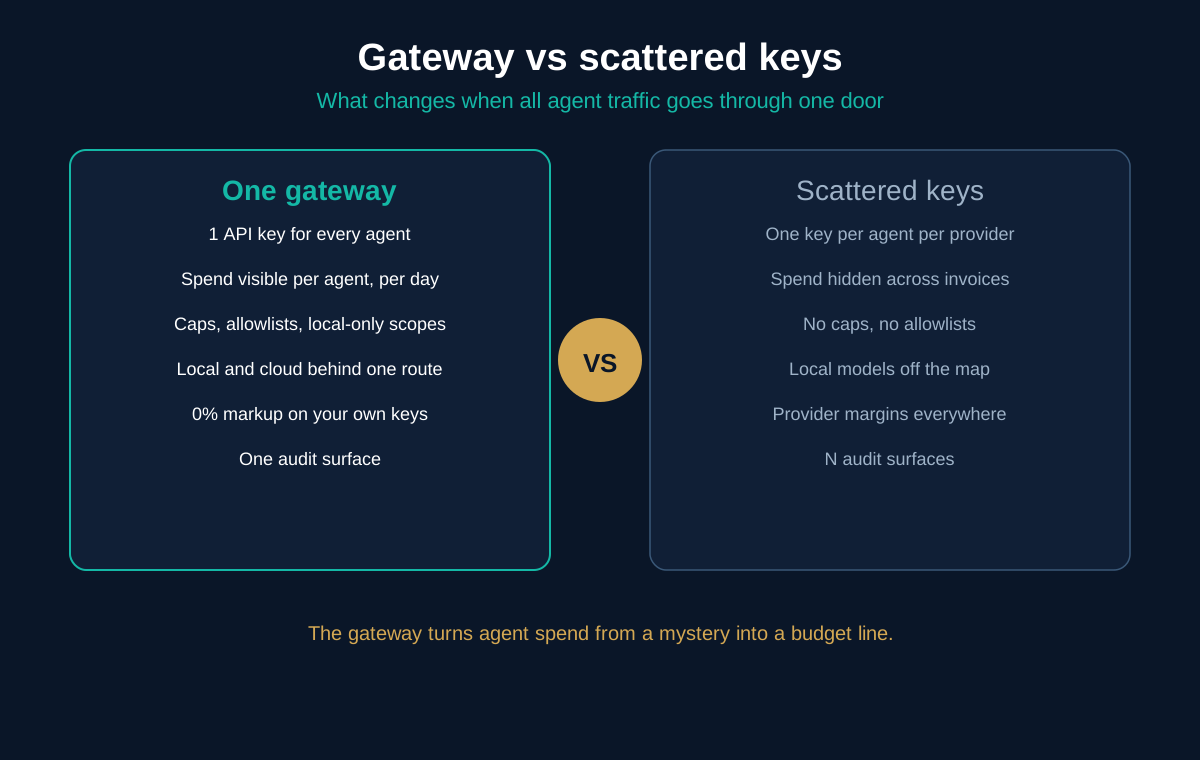
Without a gateway, every tool shops independently. Claude Code uses Anthropic, Cursor uses its own cloud, Codex uses OpenAI, and a local agent hits your GPU. Each has a key, a billing account and a spend ceiling you only discover at month end. With a gateway, all traffic goes through one door: the same endpoint, one key per agent or team, and every call accounted for in one place.
That is not just tidy, it is the difference between AI spend being a metric and AI spend being a mystery. For business owners, a gateway is the control plane that makes agent rollout safe enough to scale.
What Is Experiential?
Experiential is an open source gateway and router for agent workflows, released under Apache-2.0, with 5,600+ GitHub stars since June 2026 and active development. It serves hosted, BYOK and local models through one OpenAI-compatible API, plus an Anthropic Messages-compatible surface, with 1,000+ marketplace models and zero markup on your own keys.
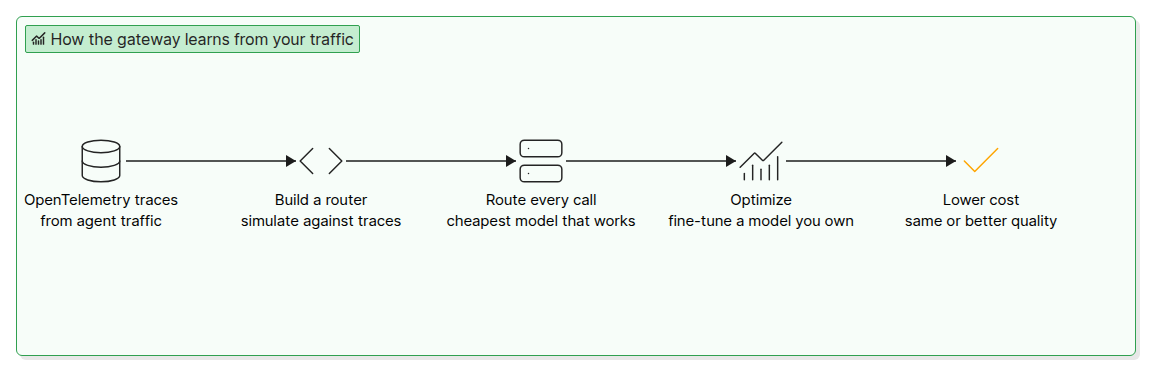
According to the project README, it does "three things: use hosted, BYOK, and local models through one OpenAI-compatible API; control which users and agents can use which models, for which use cases, and how much they can spend; and turn production traffic into a custom router or model optimized for quality, speed, and cost." That third item is the differentiator. According to the GitHub description, the gateway "learns from your traffic to cut costs, recommend better models, and train a specialized model you own."
You have two deployment options. Self-host it, where pip install experiential and one command starts the gateway, or use the hosted platform at api.experientiallabs.ai/v1, which serves the same API with the option of enterprise controls. Either way, agents see a familiar endpoint.
How Do Spend Caps Actually Work?
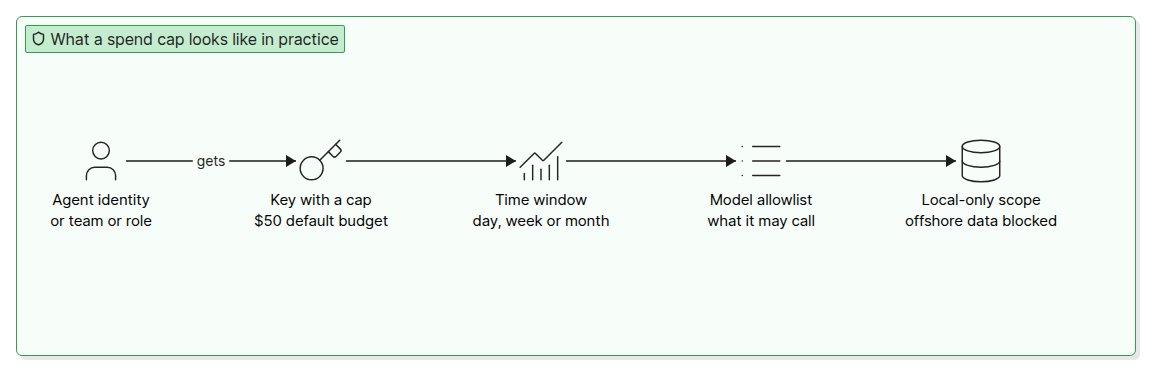
Every key gets a budget and a scope. The biggest control, and the reason this tool matters, is a hard cap: an agent literally cannot spend more than the budget on its key, whether that budget resets daily, weekly or monthly. The cap is enforced at the gateway, before the call ever reaches the provider, so runaway loops die at the door instead of on your invoice.
The mechanism is a key plus policy. Create a key for an agent, a team or a role, then attach a budget for a day, week or month, a model allowlist that says what it may call, and a scope that can be local-only. According to the README, the setup wizard opens with a $50.00 command budget as the default, so a fresh gateway is already safe. Local-only scopes are the feature that matters for Australian businesses: you can force the sensitive workload onto onshore hardware while the cheap, boring calls go to the cloud.
Spend control is the entry point, but visibility is the payoff. Every agent's usage lands in one dashboard, so you can see which agent consumes what, and cut the bad actor or the over-eager prompt chain with a policy edit instead of a confrontation.
How to Set Up Experiential in 15 Minutes
Install, connect, budget, point. Four moves get a working gateway, and the remaining two turn it into a cost engine. The whole flow is intentional: the wizard persists every provider connection, budgets the first key at $50 and prints a one-time key, so a safe gateway exists before your first agent ever talks to it.
- Install: run pip install experiential, then run exp to start the local gateway.
- Connect providers: the wizard persists provider connections and prints a one-time key.
- Set the budget: confirm or change the $50.00 default per key.
- Point agents at it: repoint Claude Code, Cursor, Codex or Aider to the gateway endpoint. The project's SETUP.md has copy-paste prompts so the agent wires itself up.
- Watch traffic: review per-agent spend and model usage in the dashboard.
- Optimise: export OpenTelemetry traces, run exp build to simulate a cheaper router, or run exp optimize to fine-tune an open model you own with Tinker.
The telemetry question is worth a note. Anonymous aggregate product telemetry is on by default, but the README states it never includes prompts, traces, model names or credentials, and exp config telemetry disable turns it off. For clients that need that guarantee in writing, self-hosting plus telemetry off is a clean answer.
Can a Gateway Actually Cut Your AI Costs?
Yes, in three ways: route each call to the cheapest model that passes, cap the agents that would otherwise run away, and eventually replace rented inference with a model you own. Each lever compounds, so the first month is about visibility, the second about routing and the third about ownership of the workload itself.
First, routing. The gateway logs every call with the model used and the outcome, then builds a simulation of your traffic with exp build to find the cheaper router that keeps quality. Second, caps. The single highest-leverage saving is stopping the agent that burns $400 in a weekend, and a daily budget does that automatically. Third, ownership. According to the README, exp optimize fine-tunes an open source model against your traffic, so your most common task pattern moves onto weights you control.
Our own stack is the proof of the pattern. At Flowtivity we run dual DGX Sparks serving DeepSeek V4 Flash at roughly 60 tokens per second, and the mix logic is exactly a gateway problem: routine drafting goes local at near-zero marginal cost, frontier reasoning goes cloud when quality demands it, and the agent never knows the difference. A gateway is what makes that hybrid practical instead of manual.
Experiential vs DIY vs Scattered Keys
For most teams the gateway wins, the DIY router is a tax on your engineers and scattered keys are a rounding error waiting to become a report. The table below is the honest version: the gateway is free, instant and maintained, DIY costs weeks and keeps costing, and scattered keys cost more than either every single month.
| Attribute | Experiential | DIY router | Scattered keys |
|---|---|---|---|
| Setup time | Minutes | Weeks | Already broken |
| Per-agent spend caps | Built in | You build them | None |
| Local model routing | First class | You build it | Manual |
| Traffic learning | Built in | None | None |
| Maintenance | Community | Yours forever | Provider chaos |
| Cost | Free, zero markup | Engineer time | Provider margins |
Should You Put a Gateway in Front of Your Agents?
Yes, if you run more than one coding agent, use more than one provider, or delegate spend to people whose invoices you cannot read. Start with a self-hosted gateway, cap everything, then optimise once you have a week of traffic. The gate is the cheapest control you will ever add to an agent stack, and it pays for itself the first time a misconfigured agent tries to loop.
The adoption curve is short. Day one: gateway up, existing agents repointed, every key budgeted. Week one: visibility into which agent and which workflow actually costs money. Month one: routing rules and, if the traffic warrants it, a fine-tuned local model carrying the bulk load. The risk profile is inverted from most tools, because nothing is sent offshore that was not already going there, and caps default to safe.
The one caution is scope. A gateway controls who calls what and how much they spend, it does not make prompts safe or outputs correct. Pair it with an AGENTS.md rulebook and human review, and you have the three layers that make enterprise agent rollout defensible.
Frequently Asked Questions About the Experiential Gateway
Experiential is an open source gateway with 5,600+ stars and zero markup, caps work per key by day, week or month, local models are first class, setup takes minutes and yes, it beats a DIY router for almost everyone. The details below answer what it costs, what it can cap and whether your local GPU can sit behind it.
One email a month, no noise
Practical AI notes for Australian businesses. Unsubscribe anytime.


