On this page
- What Is the 15/80/5 Rule?
- Why Does Gary Vee's Team Rule Map So Well Onto AI Agents?
- How Does the 15/80/5 Method Work Step by Step?
- Stage 1: The 15%, Direct
- Stage 2: The 80%, Delegate
- Stage 3: The 5%, Finish
- What Belongs in the 80% and What Never Does?
- Where Does the 15/80/5 Method Fail?
- How Does Flowtivity Run 15/80/5 in Production?
- How Do You Start With 15/80/5 This Week?
- 15/80/5 Frequently Asked Questions
- What is the 15/80/5 rule?
- Who created the 15/80/5 rule?
- How do you apply 15/80/5 to AI agents?
- What work should AI agents never own?
- How much time does 15/80/5 save?
Last Updated: 4 September 2026
The 15/80/5 method is a way of working with AI agents where you direct the first 15% of a project, agents execute the middle 80% without you, and you return for the final 5% to add taste and ship. The rule comes from Gary Vaynerchuk, who posted it on TikTok on 3 September 2026 and added that AI is "playing out that way" too: be good at the upfront prompt, let the work roll, then edit. The video drew 85,792 plays, 3,858 likes and 439 shares in under 48 hours, which tells you the idea landed.
Here is why this matters now. According to the Nielsen Norman Group's study of experienced ChatGPT users, AI-assisted writers produced 59% more documents in a working day than unassisted writers. The raw capability is not the constraint. The constraint is the operating model: most people either over-prompt (redoing the agent's job) or under-direct (shipping raw output and eroding trust). 15/80/5 fixes both failure patterns by drawing a hard line between direction, execution and judgment.
This article expands Gary's rule into a full methodology you can run this week: the three stages, the three gates between them, what belongs in the 80% and what never does, the three failure modes, and production numbers from our own agent pipeline at Flowtivity.
"Everything I'm involved in at this point in my career, I want my team to involve me in the first 15% because I need to ideate and make it better, contribute my strategic and intuition feeling. I then let them go and completely own the next 80%. And then I come in at the last 5% and put a cherry on top or a little whipped cream."
Gary Vaynerchuk, TikTok, 3 September 2026
Vaynerchuk calls it the greatest system of his career and says he is thinking about writing a book about it. You do not need the book. You need the mechanics, and they map one-to-one onto agentic AI.
What Is the 15/80/5 Rule?
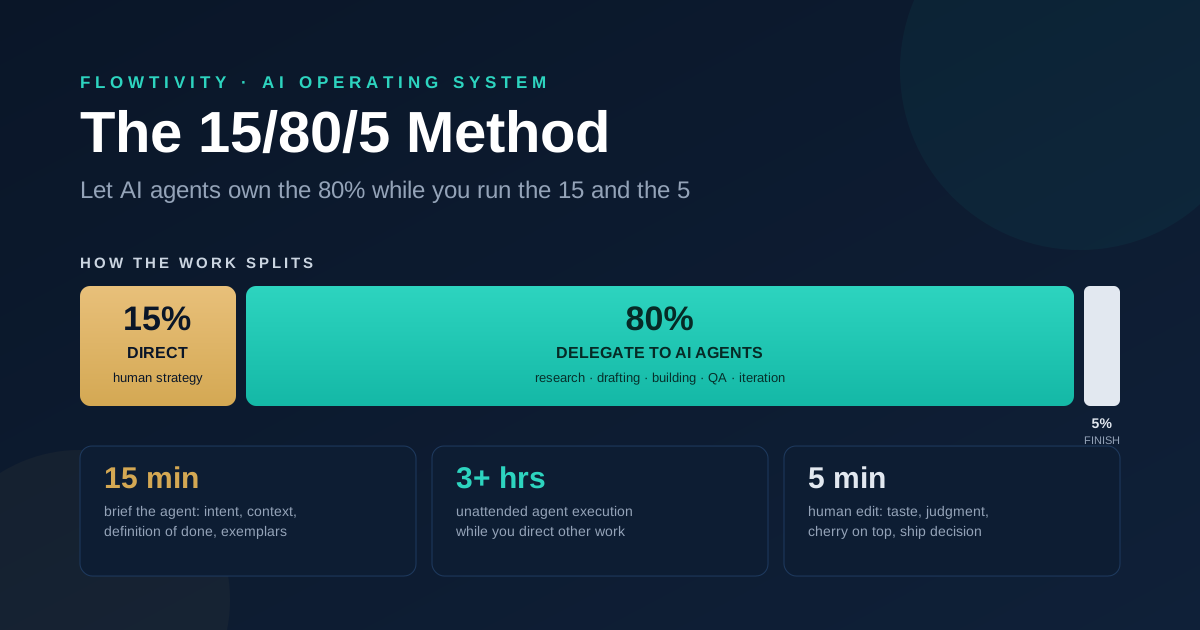
The 15/80/5 rule splits any piece of work into three ownership zones. The first 15% is direction: ideation, strategy, context and the definition of quality, owned by the senior person. The middle 80% is execution, owned completely by the team, or in the AI version, by agents. The final 5% is finishing: editing, taste and the decision to ship, owned again by the senior person. The percentages describe where human attention concentrates, not where hours go, because the 80% runs mostly without you.
Vaynerchuk's framing solves a problem most leaders get backwards. They either drown in the middle of projects they should have delegated, or they hand off so vaguely that the result comes back wrong. The rule says the two edges are non-negotiable human territory and the middle is not. That asymmetry, attention at the edges, volume in the middle, is exactly the shape of a well-run AI agent pipeline.
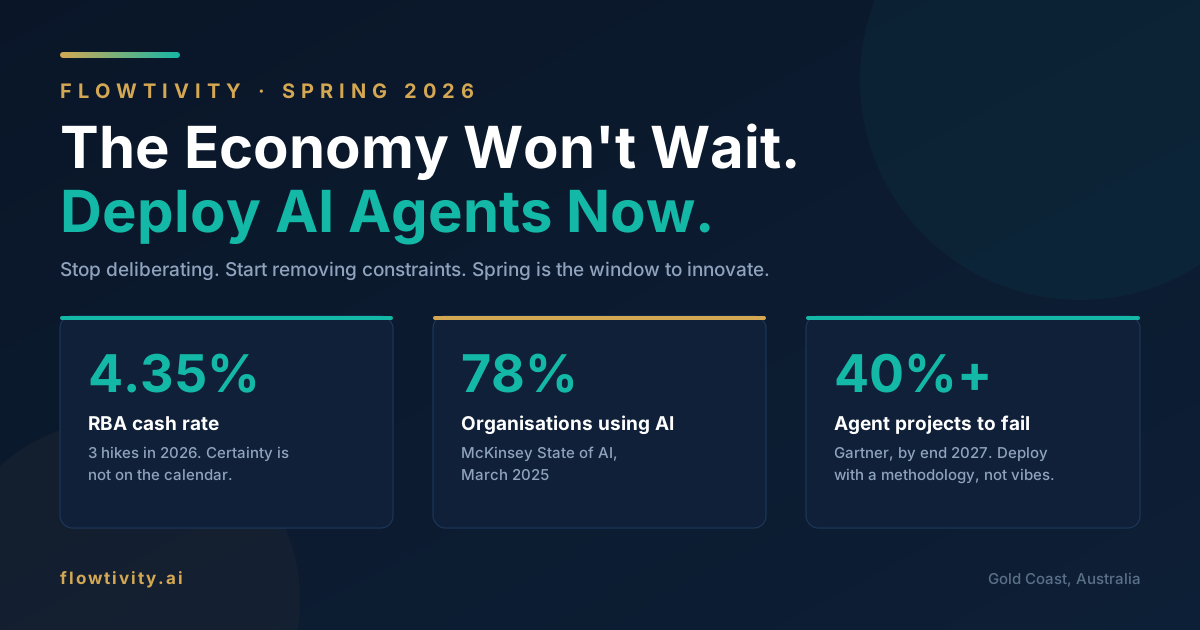
The numbers also carry a warning about doing this casually. According to Gartner's March 2025 prediction, over 40% of agentic AI projects will be canceled by the end of 2027, most often because organizations deploy agents without an operating model around them. A rule like 15/80/5 is the missing operating model in one line.
Why Does Gary Vee's Team Rule Map So Well Onto AI Agents?
Teams and AI agents fail for the same two reasons: unclear direction upfront and no judgment at the end. Large language models respond to rich context and explicit quality bars, which is precisely what the 15% produces: intent, constraints, audience and examples of good. Agents then run unattended, which is the 80%. Human editing at the end catches the errors that matter, which is the 5%. The rule works for people and machines because it is really a rule about attention allocation.
Three properties of agents make the fit tight. First, agents are context machines: the single biggest lever on output quality is the brief they receive, which is your 15%. Second, agents are tireless in the middle: research pulls, draft assembly, QA loops and data work can run for hours at cents per run. Third, agents have taste blind spots: they cannot reliably know what will feel right to your audience, which is your 5%.
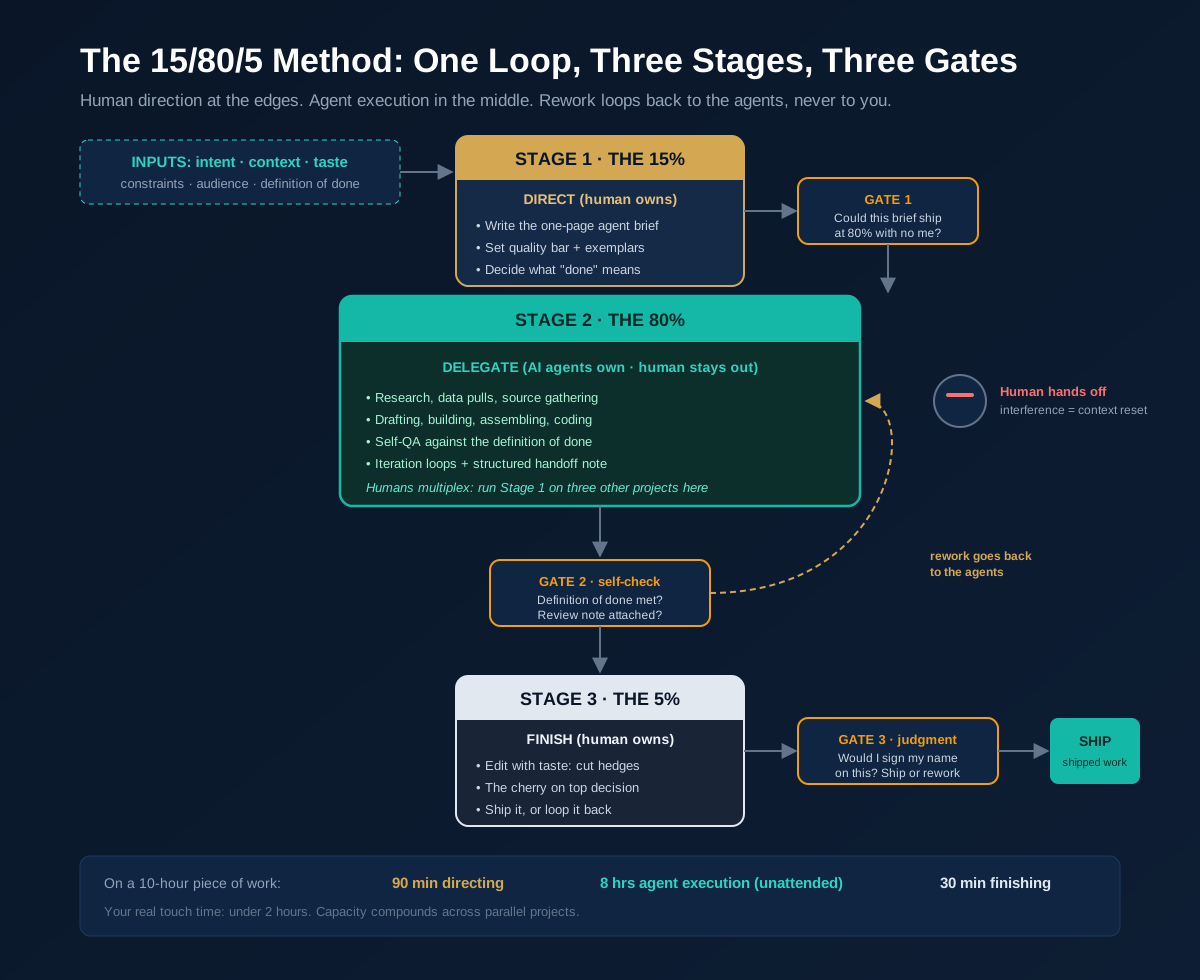
Notice the rework loop in the diagram. When the 5% review finds problems, the fix goes back to the agents with specific instructions. The moment you start redoing the 80% yourself, you have left the method and returned to being the bottleneck.
How Does the 15/80/5 Method Work Step by Step?
Stage 1, the 15%, is a one-page agent brief: intent, audience, constraints, quality bar, two or three exemplars and a measurable definition of done. Stage 2, the 80%, is unattended agent execution: research, drafting, building, self-QA and iteration against the definition of done. Stage 3, the 5%, is a taste edit and a ship decision based on a review note the agents write for you. Each stage ends at a gate that must pass before work moves on.
Stage 1: The 15%, Direct
You own intent, context and the quality bar. The output of this stage is not a document. It is a one-page brief an agent can act on: what this is for, who it serves, what constraints apply, what "done" means, and two or three examples of work you consider good. Exemplars matter more than adjectives. "Make it punchy" is noise. Three links to pieces you loved is signal.
Gate 1 asks one question: if agents executed this brief perfectly, would the result be at least 80% right with no further input from me? If not, the brief is not done. Fifteen minutes of rewriting the brief beats fifteen rounds of re-prompting later.
Stage 2: The 80%, Delegate
Agents own research, drafting, building and QA. An orchestrator splits your brief into tasks, fans them out to worker agents, merges results and scores the output against your definition of done. Humans stay out. This is the hard part for most operators, because the instinct is to watch and tinker.
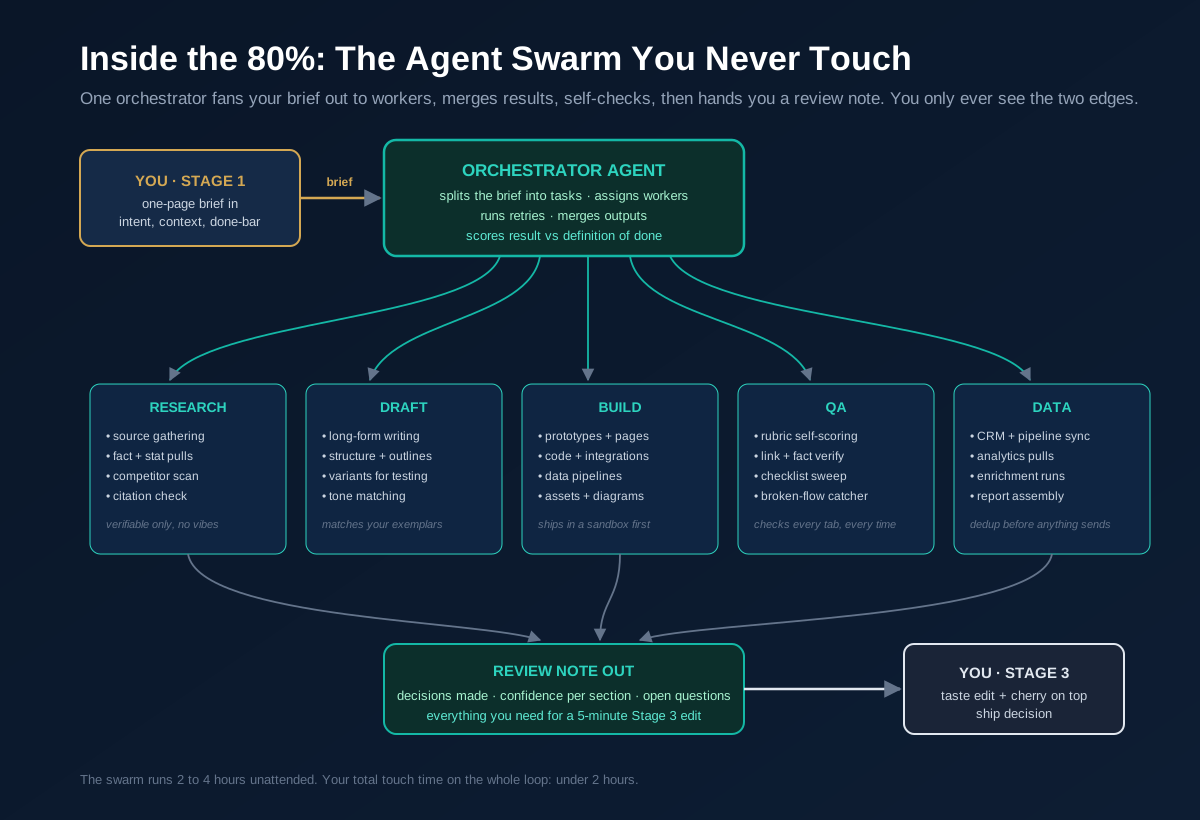
Gate 2 is the agents' self-check: definition of done met, review note attached. The review note lists decisions made, confidence per section and open questions. It exists so your Stage 3 edit takes minutes, not hours.
Stage 3: The 5%, Finish
You own taste and the ship decision. Cut hedge words, sharpen the headline, replace the weakest example, add the cherry on top that makes it feel human. Then either ship it or send specific rework instructions back to the agents. Gate 3 asks: would I sign my name on this? If yes, ship. If no, loop it back with notes.
On a 10-hour piece of work, the split looks like this: about 90 minutes directing, 8 hours of agent execution you never attend, and 30 minutes finishing. Your real touch time is under two hours, and during the 8 hours you are running Stage 1 on other projects. That multiplexing is where the method compounds.
What Belongs in the 80% and What Never Does?
The 80% is execution with a reversible output and a clear success test: research, first drafts, code assembly, data pulls, QA checklists, report generation and asset production. It is not judgment with lasting consequences. Strategy, pricing, hiring, legal commitments, sensitive communications and anything requiring accountability stay with humans, because agents execute and recommend while humans decide and sign.
A useful test: if the worst-case outcome of an agent error is embarrassment caught in your 5% edit, delegate it. If the worst-case outcome is a contract, a customer relationship or a compliance breach, keep the decision and delegate only the preparation around it.
| Type of work | Owns it in 15/80/5 | Examples |
|---|---|---|
| Direction and strategy | Human (the 15%) | Briefs, positioning, priorities, definition of done |
| Research and assembly | Agents (the 80%) | Source gathering, data pulls, drafts, prototypes |
| Quality control | Agents check, human spot-checks | Rubric scoring, link verification, QA sweeps |
| Taste and polish | Human (the 5%) | Final edit, headline, example choice, voice |
| Accountability decisions | Human, always | Ship calls, pricing, hiring, legal, sensitive sends |
Where Does the 15/80/5 Method Fail?
The method fails in three repeatable ways. Skipping the 15% produces drift: ten prompt rewrites that a fifteen-minute brief would have prevented. Meddling in the 80% produces the micromanagement tax: every interruption resets agent context and reintroduces you as the bottleneck. Skipping the 5% produces trust erosion: output that reads 95% right but feels 60% right, and audiences notice the missing human finish.
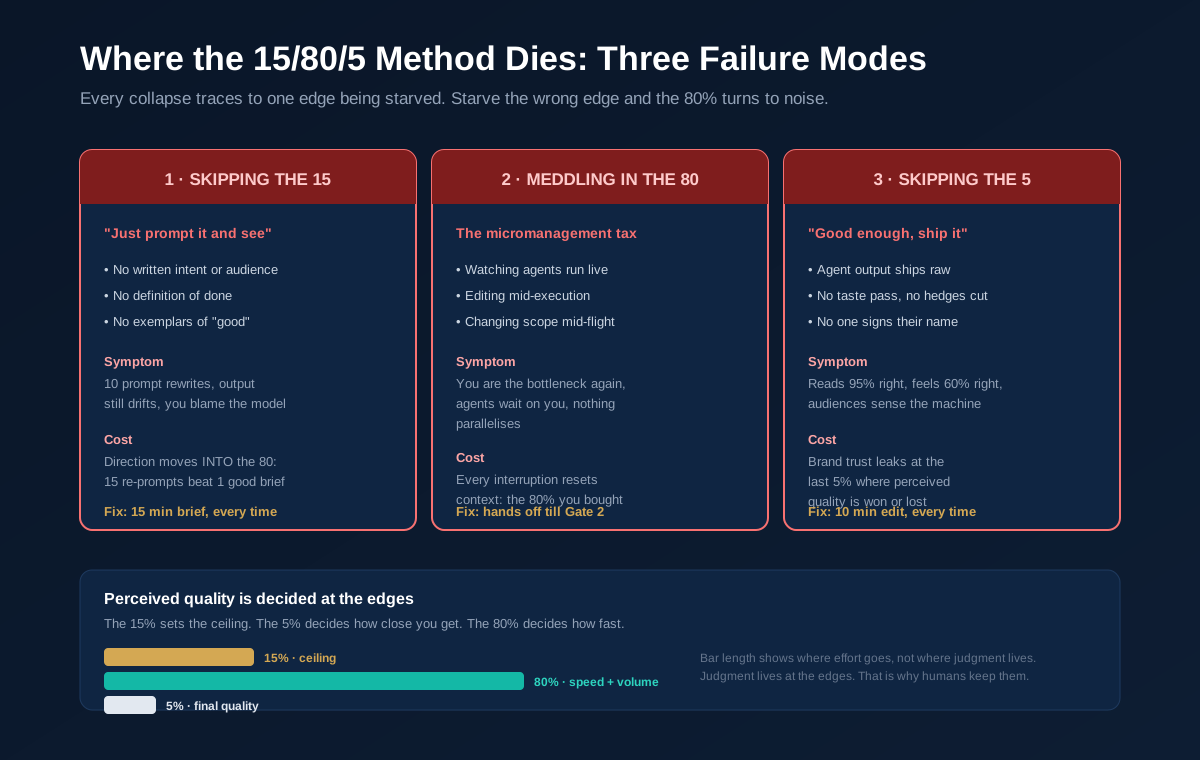
The first failure mode deserves emphasis because it feels productive. Prompt-tweaking feels like work, but it is direction leaking into execution, done badly, fifteen times. The brief is the product of Stage 1. The re-prompt is the punishment for skipping it. According to Gartner's 2025 analysis, poor clarity around agentic project objectives is a leading driver of the 40%-plus cancellation rate, which is the enterprise-scale version of the same error.
How Does Flowtivity Run 15/80/5 in Production?
Flowtivity's content engine now ships 2 to 3 AEO-optimised posts per day. A post that cost about six hours of hands-on time before agents now costs under two hours of human touch: roughly 15 minutes on the brief, 2 to 4 hours of unattended agent execution, and 10 to 15 minutes on the final edit. The same pattern runs our prototype-first outreach, where agents build demo artifacts overnight and humans own which prospect gets what.
The production numbers behind this article make the point. The research, transcript extraction, visual design and draft assembly for this post ran as an agent pipeline. Human time concentrated exactly where the method says it should: choosing the angle from a 34-second video, deciding the methodology shape, and finishing the piece you are reading.
Three practices made the loop reliable in production. First, briefs are written artifacts, never chat threads, so they can be reused and improved. Second, every agent run ends with a review note, so the 5% edit starts informed instead of from zero. Third, rework instructions go back to the agents with specifics, which keeps the 80% learning instead of the human redoing it.
How Do You Start With 15/80/5 This Week?
Pick one repeated workflow with a clear output, such as a weekly report, a blog post or a research summary. Write a one-page brief with a definition of done and two exemplars. Hand it to your agents and deliberately stay away until they finish. Read the review note, spend ten minutes on taste, and ship. Track one metric across two runs: your total touch time per output.
Start with work that is frequent, bounded and low-risk if imperfect. A weekly competitor summary is a better first target than your investor update. Once one loop runs cleanly, add the second and third. The goal is not one impressive demo. It is a portfolio of loops where your touch time is under 20% of the work and falling.
The quiet unlock is calendar compounding. When the 80% runs without you, the method stops being about saving time on one task and becomes about directing more work in parallel. That is the same shift Vaynerchuk describes with his team, and it is the reason he calls it the greatest system of his career. Agents just make the middle cheaper.
15/80/5 Frequently Asked Questions
What is the 15/80/5 rule?
The 15/80/5 rule is a delegation model described by Gary Vaynerchuk in a TikTok video posted 3 September 2026: you are involved in the first 15% of a project to set direction, the team completely owns the middle 80%, and you return for the final 5% to add the finishing touches.
Who created the 15/80/5 rule?
Gary Vaynerchuk. He described it as the greatest system of his career and noted that AI is playing out the same way: strong upfront prompting, unattended execution, then human editing.
How do you apply 15/80/5 to AI agents?
Write a one-page agent brief covering intent, audience, constraints, exemplars and a definition of done. Hand it to an agent swarm and stay out of execution. When agents finish, read their review note, run a taste edit and make the ship decision.
What work should AI agents never own?
Agents should never own judgment calls with lasting consequences: strategy, pricing, hiring, legal commitments and sensitive communications. Agents execute and recommend. Humans decide and sign.
How much time does 15/80/5 save?
In Flowtivity's production content engine, a blog post that cost about six hours of hands-on time now costs under two hours: 15 minutes briefing, 2 to 4 hours of unattended agent execution and 10 to 15 minutes of final editing.
Want the method installed in your business? Flowtivity builds agentic workflows for growing businesses: direction at the edges, agents in the middle, judgment where it counts. Book a discovery call and we will map your first 80% handoff in one session.
Written by AJ Awan. Former EY management consultant, TOGAF certified enterprise architect, founder of Flowtivity. Methodology credit for the 15-80-5 rule: Gary Vaynerchuk, TikTok, 3 September 2026.
One email a month, no noise
Practical AI notes for Australian businesses. Unsubscribe anytime.