On this page
Last Updated: 25 July 2026
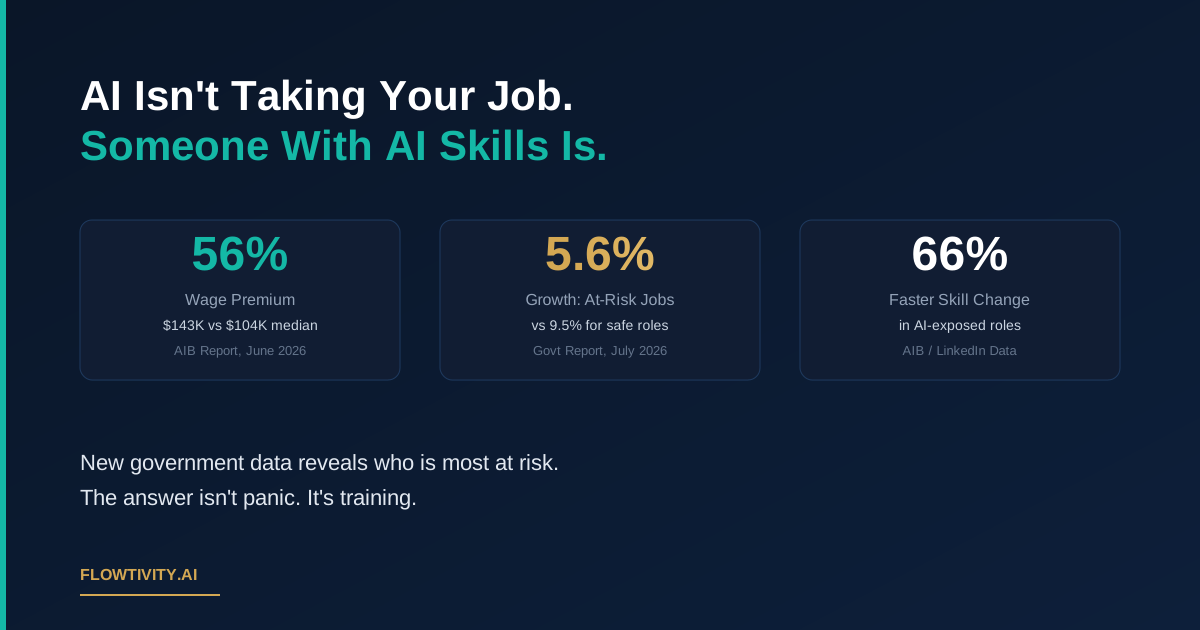
A new report from the Australian government has revealed which professions are most at risk from AI, and the data tells two stories. Yes, some roles are exposed. But the bigger finding is that workers with AI skills are thriving, earning a 56% wage premium and outpacing peers in career growth. The threat is not AI itself. It is being the person without AI training when your competitors have it.
The findings, covered by 10 News Australia and published by Jobs and Skills Australia, analyse four years of employment data since ChatGPT launched in late 2022. A separate study from the Australian Institute of Business found that AI-exposed roles actually grew by 10% between 2019 and 2024. The conclusion is clear: AI is not destroying jobs, but it is rapidly reshaping which skills matter.
What the Government Report Found
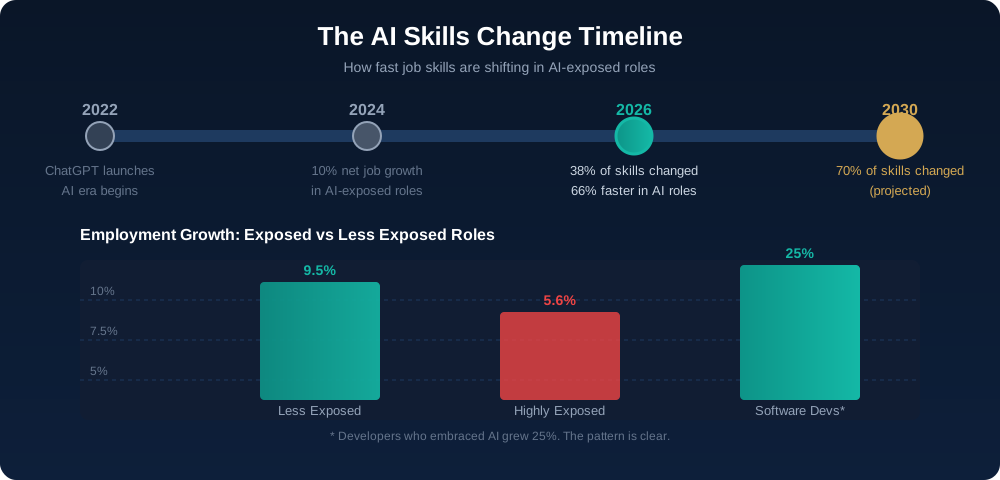
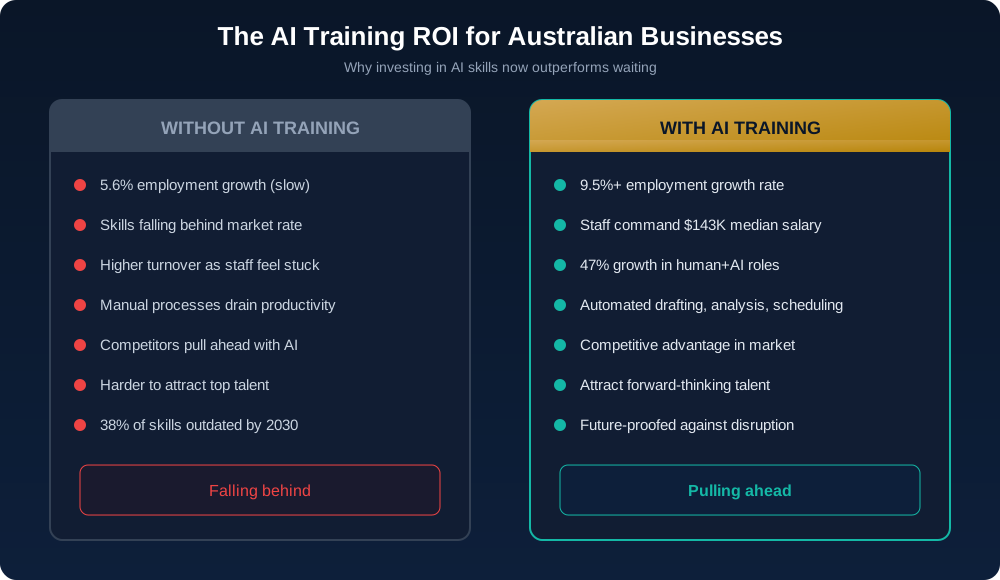
The federal government's first-of-its-kind report, "AI and Employment in Australia" (published July 2026), analysed employment data across every occupation to measure AI exposure. Author and chief economist Matt Cowgill found no evidence of widespread job losses. However, employment growth in highly exposed occupations was 5.6%, compared to 9.5% growth for less exposed roles. That gap suggests AI is slowing demand for certain tasks, not eliminating entire professions.
According to The Guardian's coverage of the report, Cowgill noted that "Australia is actually one of the world's biggest users of AI," making the resilient jobs market a meaningful signal rather than a lag effect. Even in the United States, the frontier of AI adoption, the jobs market has remained "reasonably well."
Which Australian Jobs Are Most Exposed to AI?
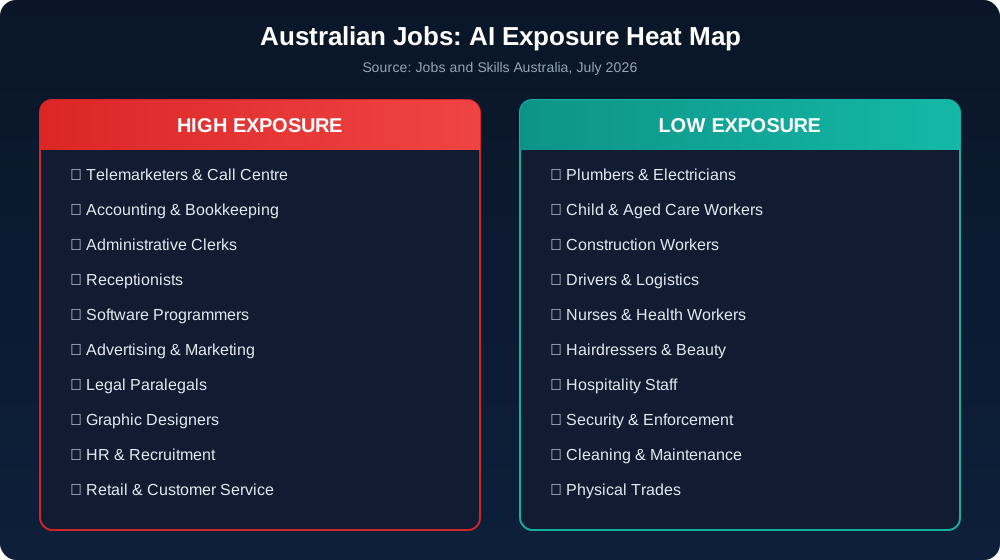
The report identified occupations where routine cognitive tasks make workers vulnerable to AI tools. The most exposed roles include telemarketers, accountants, receptionists, software programmers, advertising and marketing professionals, administrative clerks, bookkeepers, legal paralegals, and graphic designers. Workers in these roles are more likely to be women and university graduates, reflecting the cognitive and administrative nature of the work.
Some highly exposed roles defied the trend. Software developer employment grew 25% between November 2022 and February 2026, as AI augmented rather than replaced skilled developers. This is the key distinction: professionals who learn to work with AI tools tend to grow, while those who do not adapt face slower trajectories.
Which Jobs Are Safest From AI?
Tradies are on solid ground. The report confirms that plumbers, electricians, child and aged care workers, drivers, and other hands-on occupations have the lowest exposure to AI displacement. Men make up 70% of workers in safer roles, and fewer hold university qualifications. These jobs require physical presence, manual dexterity, and human judgement in unpredictable environments, capabilities that current AI systems cannot replicate.
However, even trades businesses rely on administrative and customer-facing roles that are more exposed. A plumbing company's receptionist, bookkeeper, or marketing coordinator faces the same AI pressures as any office worker. This is why whole-of-business AI training matters, not just for desk roles.
The AI Wage Premium: $143,000 vs $104,000
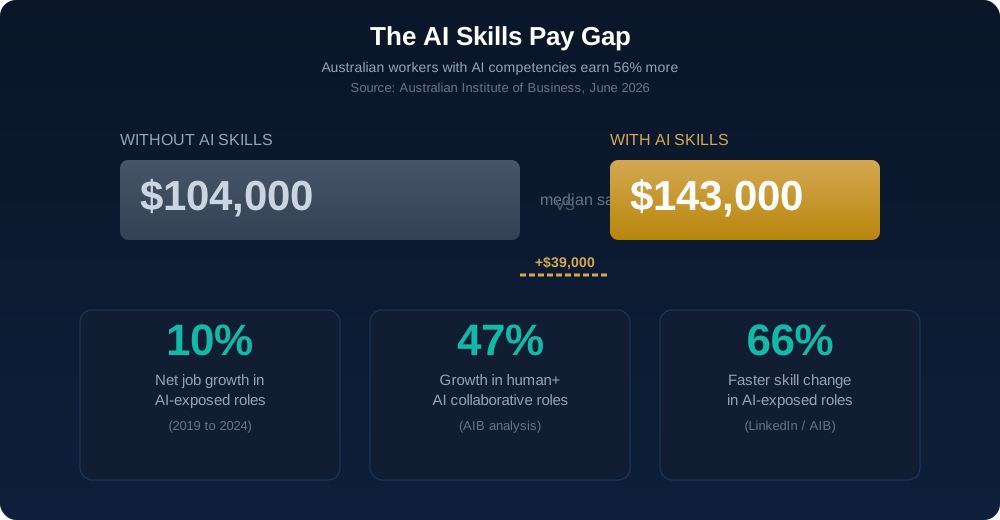
Here is where the story flips. According to the Australian Institute of Business (AIB), workers with AI competencies command a median salary of $143,000, a 56% premium over the broader workforce median of approximately $104,000. That is a $39,000 salary gap driven entirely by AI skills.
The AIB analysis also found that jobs where humans work alongside AI grew by 47% between 2019 and 2024. Even roles classified as "automatable" grew by 45%. The data consistently shows that AI is expanding opportunities for skilled workers, not contracting them.
"AI's real value is not limited to automation. Its greatest organisational impact comes from helping managers convert large, complex and fast-moving data into timely and actionable decisions," said Dr Sajjad Shokouhyar, Senior Lecturer at AIB.
Why AI Training Is the Answer, Not Fear
The skills required for AI-exposed roles are changing 66% faster than other occupations. According to LinkedIn Australia, 38% of job skills have already changed globally since 2022, and that figure could reach 70% by 2030. The message from every report, dataset, and economist is the same: the risk is not AI taking your job. The risk is a competitor who knows how to use AI taking your job.
For Australian businesses, this creates both urgency and opportunity. Teams that receive structured AI training can:
- Increase productivity by automating repetitive cognitive tasks while focusing human effort on strategic work
- Reduce costs by using AI for drafting, analysis, scheduling, and customer communication
- Improve retention by investing in staff development during a period of rapid skill change
- Gain competitive advantage over slower-moving competitors still deciding whether AI matters
How Flowtivity AI Training Prepares Your Team
At Flowtivity, we have spent years helping Australian businesses adopt AI practically. Our training programs are not TED talks. They are hands-on workshops where your team learns to use AI in their actual workflows, with your real data and business context.
Our AI Academy programs include:
- Prompt Engineering Masterclass: Turn staff into AI-native employees who use AI with confidence in daily work
- Build Your Own AI Agents: Empower technical teams to design, build, and deploy custom AI agents for operations
- AI Value Chain Mapping: Help leadership identify and prioritise the highest-impact AI use cases across the organisation
- Claude Co-Work Workshop: Hands-on training where teams build production AI agents with human oversight
- AI Transformation Coaching: Executive-level guidance on cultural and strategic AI adoption
Each program is tailored to your industry, team roles, and existing technology stack. We have delivered training for organisations ranging from allied health providers to engineering firms, and we bring the same prototype-first, results-driven approach to every engagement.
The Bottom Line
The Australian government's data is unambiguous. AI has not caused mass unemployment, but it has created a two-speed workforce. Workers with AI skills earn $39,000 more per year. Roles requiring AI competencies are growing faster. And the skills gap is widening at 66% faster than baseline.
The businesses that will thrive in the next five years are the ones investing in training now. Not in three years when the gap becomes a crisis. Now, while the data still says "resilient" rather than "disrupted."
Ready to future-proof your team? Explore our AI training programs or reach out directly to discuss a custom training plan for your business.
One email a month, no noise
Practical AI notes for Australian businesses. Unsubscribe anytime.