On this page
- Key takeaways
- Why is building more agents the wrong goal?
- What does an agentic workflow own that an agent does not?
- Why did Pega's CEO call 10,000 agents madness?
- What changed at the bank with 200 complaint categories?
- Why is 2026 turning into an orchestration fight?
- How many agents should a business actually run?
- Where does local inference change the maths?
- What does the Flowtivity play look like?
- What should you do in the next 30 days?
- Run the 60-second agent inventory
- Frequently asked questions
- Does one workflow mean one agent?
- Is this just robotic process automation with a language model bolted on?
- How do we measure whether a workflow is working?
- Can a small business run this without an enterprise platform?
- What about vendors that sell prebuilt agents?
- Why does data residency matter here?
- Takeaways
Last Updated: 25 November 2026
Key takeaways
- ▪ Pega CEO Alan Trefler called the race to deploy thousands or even 10,000 agents madness, and his chief product officer says the outcome is faster resolution, not agent count (ETEnterpriseAI, 24 November 2026).
- ▪ An agentic workflow owns the outcome, the sequence, the state, the escalation path and the audit trail. An agent owns one bounded piece of judgement inside it.
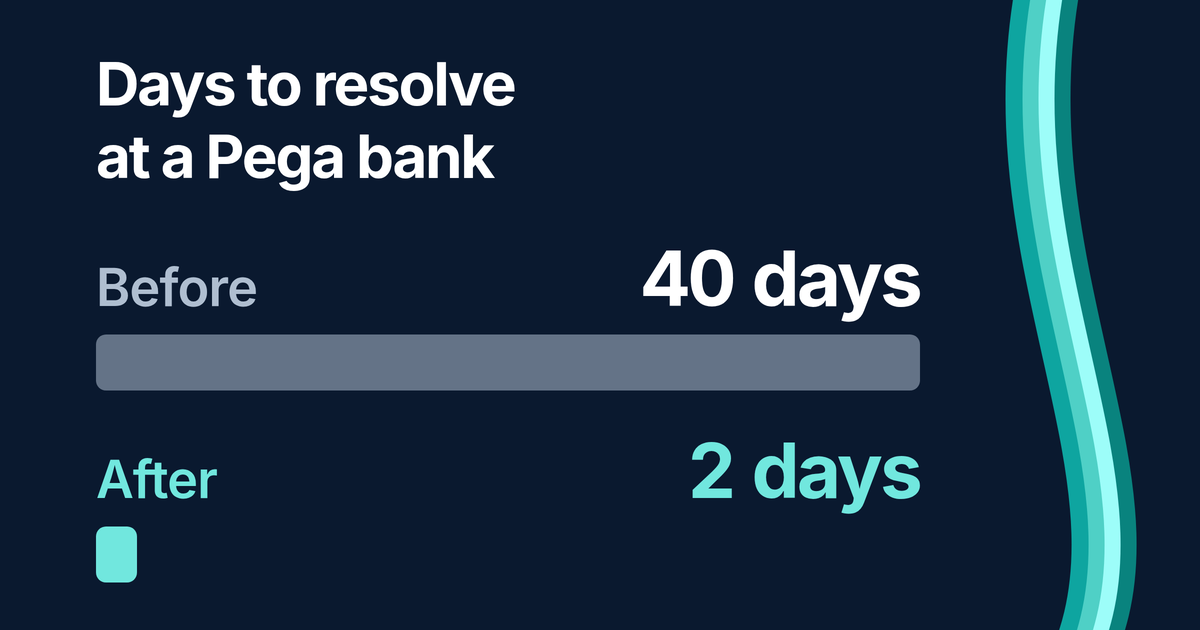
- ▪ A Pega bank handling complaints across 200 categories cut average resolution from 40 days to 2 by combining agents, deterministic automation and human intervention.
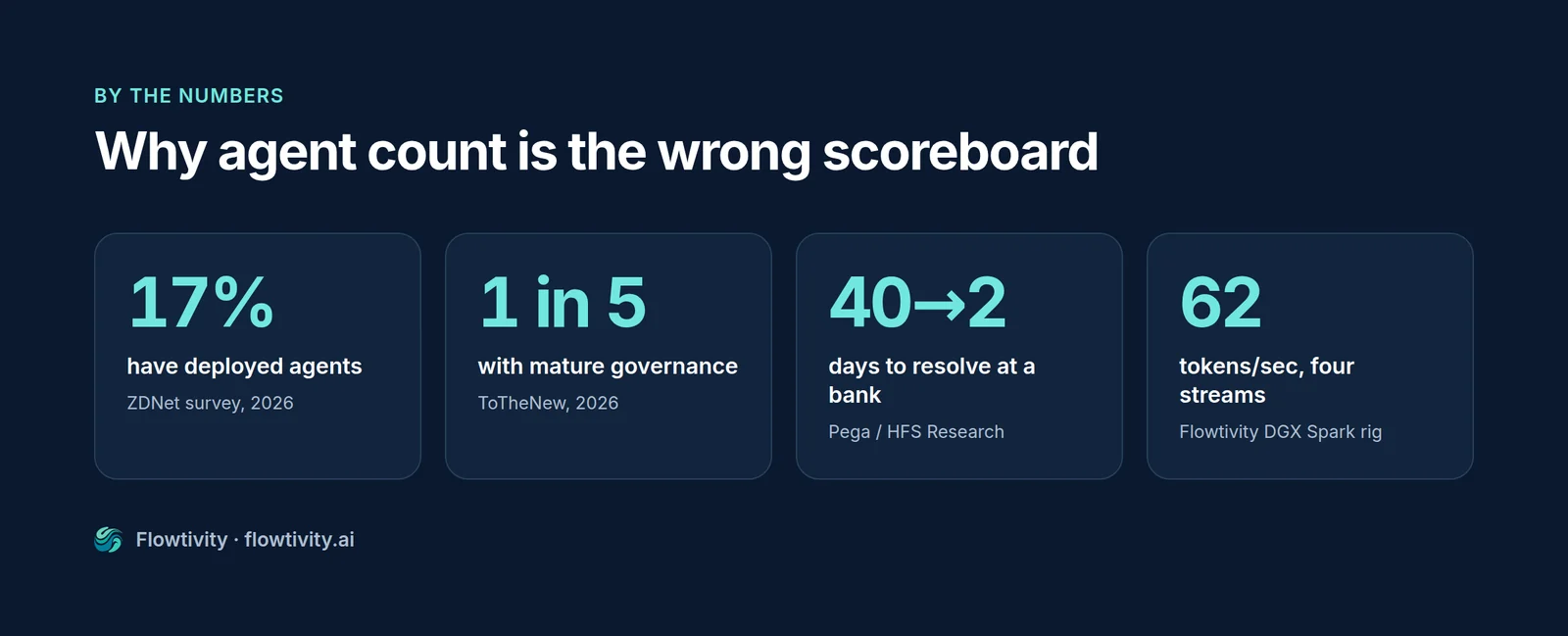
- ▪ Only 17 percent of organisations have deployed AI agents, while more than 60 percent expect to within two years (ToTheNew, 2026), so most agent estates are still being designed.
- ▪ Gartner expects more than 40 percent of agentic AI projects to be cancelled by the end of 2027 because of cost, unclear value and weak risk controls.
- ▪ Local inference on hardware you own makes the cost of a workflow flat and keeps the data onshore. Our dual DGX Spark rig runs DeepSeek V4.1 Flash at 35 tokens per second on one stream and 62 across four.
Why is building more agents the wrong goal?
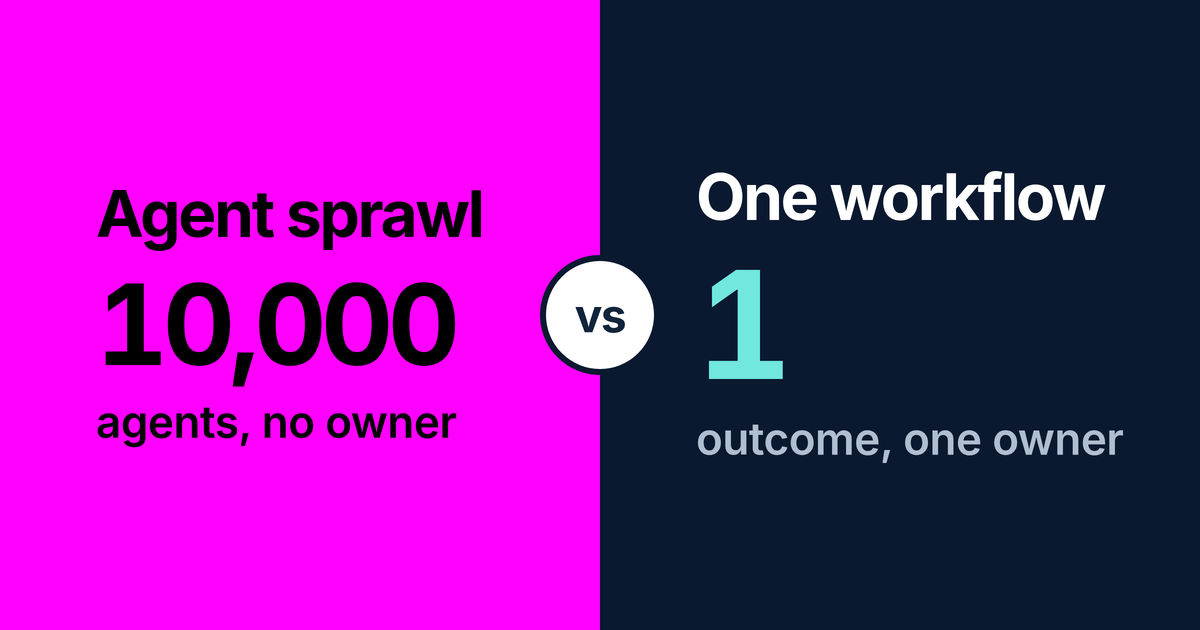
Agent count is an input, not an outcome. Pega CEO Alan Trefler told HFS Research CEO Phil Fersht that software companies deploying thousands, or even 10,000, agents is madness, and the company's chief product officer repeated the point in an interview with ETEnterpriseAI on 24 November 2026. The question that matters, he said, is whether the business gets faster resolution, better decisions, lower effort and higher accuracy. Nobody is paid for the number of agents in the estate. Most organisations have not committed yet either: only 17 percent have deployed AI agents, while more than 60 percent expect to within two years, according to the ToTheNew 2026 production playbook. That is a rare window. The design decisions being made now will decide which projects survive Gartner's forecast that more than 40 percent of agentic AI projects will be cancelled by the end of 2027.
What does an agentic workflow own that an agent does not?
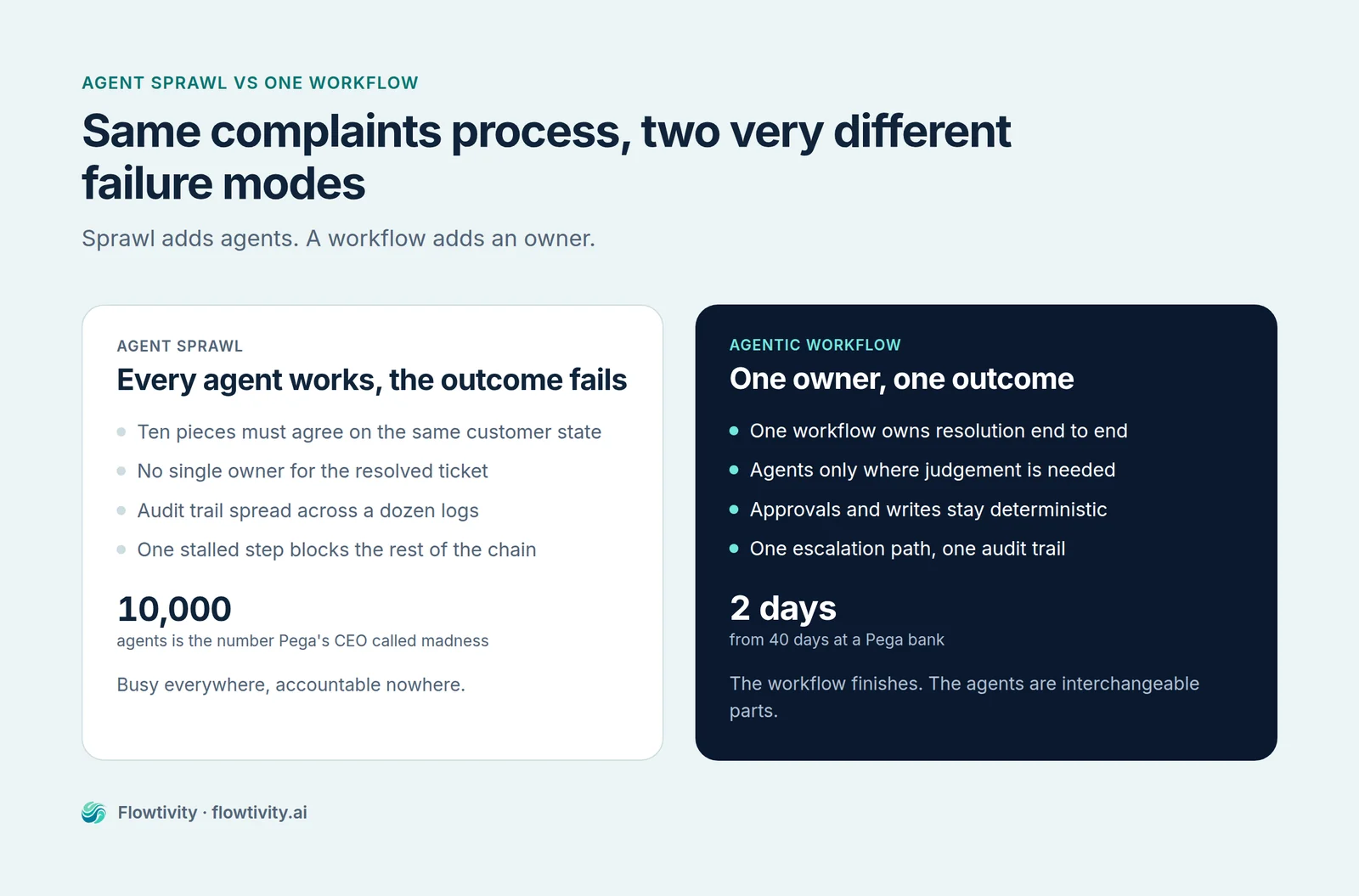
A workflow owns the outcome, the sequence of steps, the state of the case, the escalation path and the audit trail. An agent owns one bounded piece of judgement inside that sequence. That distinction is the whole design. Most business processes need determinism at the edges: validation, approvals, calculations, record writes and compliance checks. An agentic workflow lets you keep those steps deterministic and place the model only where a person would otherwise have to read, interpret or decide. The workflow is the product. The agent is a component. Pega's framing is that the workflow sits over the automation, and the automation underneath can be AI agents, statistical AI, LLMs or robotic process automation. A single workflow can mix all four.
Why did Pega's CEO call 10,000 agents madness?
Because agent count does not survive contact with a compliance review. Pega CPO Kerim Akgonul put it plainly: "We don't want customers to build agents with our products. What we want them to do is build agentic workflows that drive predictable outcomes." He listed the work that has to be done accurately, consistently and in line with policy every time: processing a payment, handling a dispute, responding to a claim, onboarding a customer. Those are not open-ended creative tasks. They are processes with a right answer and an audit requirement. Frontier models still have limits around accuracy, cost, data security and governance, so Pega keeps them tightly scoped and contextual rather than open-ended. An agent army multiplies the number of places where a model can be wrong, and multiplies the number of places an auditor has to look.
What changed at the bank with 200 complaint categories?
The bank did not deploy more agents. It changed the shape of the workflow. It was handling complaints across 200 categories, relying on thousands of employees, missing regulatory deadlines and paying government penalties. The fix combined AI agents for reading and classifying the complaint, deterministic automation for the steps that must happen the same way every time, and human intervention where judgement or liability sat. Average resolution time fell from 40 days to 2. That result is not a model benchmark. It is a workflow result. The same pattern applies to insurance claims, invoice matching, onboarding and support triage: the gain comes from deleting handoffs and enforcing sequence, not from adding another agent to the pile.
Why is 2026 turning into an orchestration fight?
Because the vendors have worked out that execution is the product. UiPath is repositioning from robotic process automation to what it calls an agentic AI orchestration platform, anchored by Maestro, which coordinates deterministic bots and AI agents in one case. Applied Systems paired workflow automation with an AI acquisition in November. Automation Anywhere closed its Boost.ai acquisition to pair conversational and voice AI with agents that finish work across systems. The Next Web's headline on 25 November 2026 was blunt: the AI agent wars are about to become the AI execution wars. Pega is making the same bet from the other direction. Every workflow a customer builds now becomes an MCP endpoint, so it can be called by an employee, a chat interface or another agent, while still running on one central definition with enterprise governance. The fight is no longer about who has the smartest model. It is about who owns the sequence that gets the work finished.
How many agents should a business actually run?
Start with the number of revenue-critical outcomes you want to change, not the number of tasks you can automate. One workflow per outcome is a useful starting point. Then apply a test: if two agents need the same context, the same data sources and the same escalation path, they are one workflow, not two agents. That single rule collapses most sprawling agent estates into a small number of owned processes. Each one should have a named owner, a measurable result and an audit trail. If a proposed agent cannot be tied to an outcome, a handoff it removes or a cost it cuts, it is a science project, not a business system. This is also the cheapest possible time to make that call, because only 17 percent of organisations have deployed agents so far. The rest can design the estate before it exists.
Where does local inference change the maths?
A workflow runs many times a day, so cost per run and latency per step matter more than the price of one clever answer. Local inference on hardware you own turns a variable per-seat API bill into a fixed, predictable cost. On our dual DGX Spark rig running DeepSeek V4.1 Flash, we measure 35 tokens per second on a single stream and 62 tokens per second across four concurrent streams. That is enough throughput for the judgement steps in a handful of workflows, which is exactly the shape we recommend: a few workflows, each with a model doing the hard reading and a deterministic layer doing the rest. Data also stays inside the building, which simplifies Australian Privacy Act and records obligations. The catch is that this only holds if your integrations and logs are onshore too. Local inference is a property of the inference layer, not a guarantee for the whole stack.
What does the Flowtivity play look like?
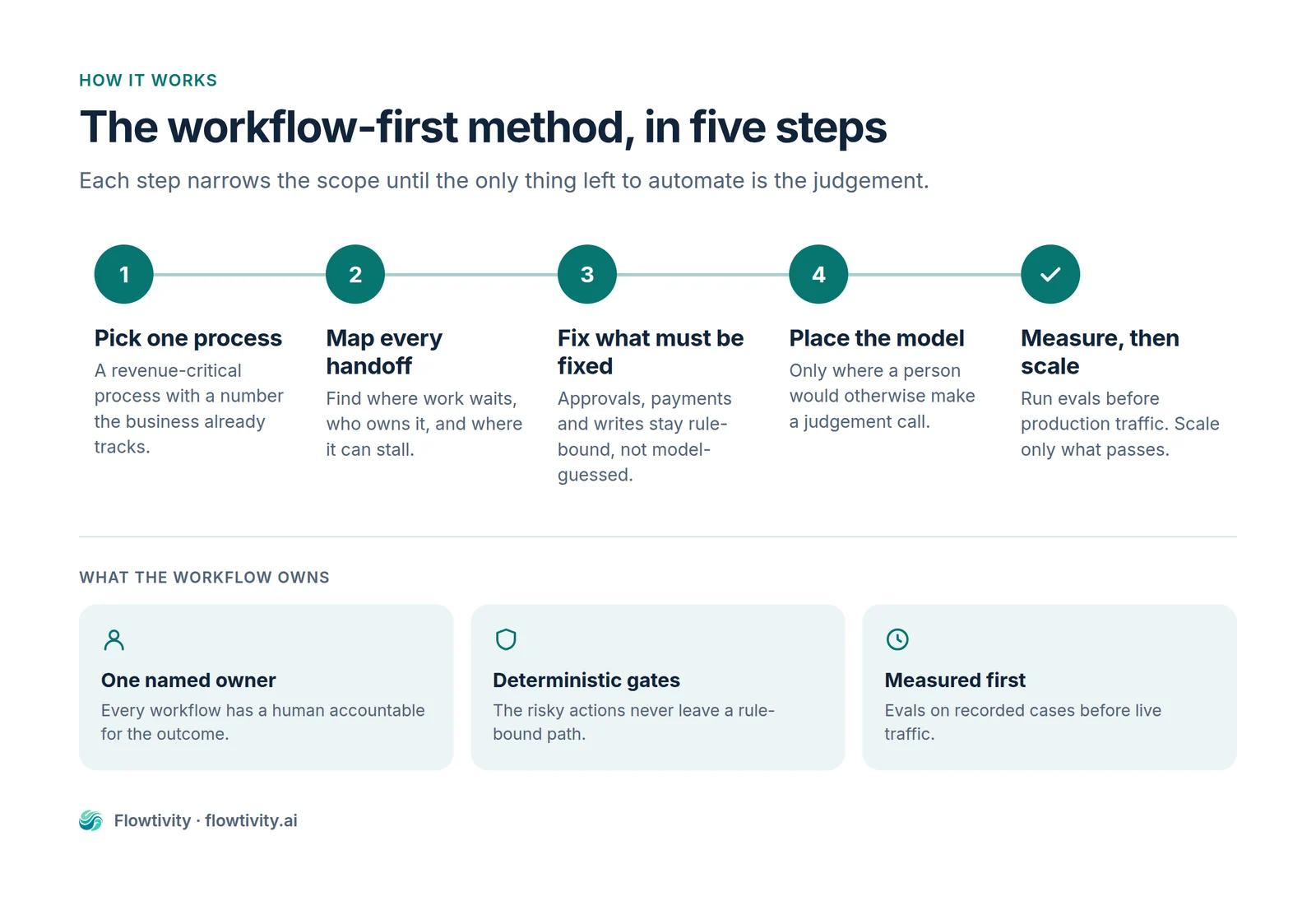
We sell outcomes, not agent count. The engagement has four parts. First, workflow discovery: pick one revenue-critical process and map every handoff, decision and system. Second, architecture: decide which steps must be deterministic, which need a model, and where the human approval gate sits. Third, build and run: deploy the workflow on local inference across our DGX Sparks, with scoped permissions, full step logging and a named owner. Fourth, prove and expand: measure cycle time, error rate and cost per run before adding scope, and only then move to the next workflow. The reason this works commercially is that the second and third workflows reuse the same platform, the same logging and the same approval pattern, so marginal cost falls while governance stays constant. That is a very different economics from adding another agent to the estate.
What should you do in the next 30 days?
Write down every agent currently running, in a pilot or proposed. For each one, note the outcome it serves, the systems it touches, the credentials it holds and the person who owns it. Then count the handoffs in the process around it. Two or fewer handoffs usually means a bolt-on agent is the right call, which we cover in our guide to rebuilding workflows around AI agents. Five or more means the workflow itself is the problem, and an agent bolted onto a relay race inherits every handoff and every delay. Pick the single process where a wrong answer is recoverable, a human can review the output and you can measure cycle time before and after. That is your first workflow. Everything else waits until it has a number attached.
Run the 60-second agent inventory
Answer these five questions for every agent in your estate, and stop funding any agent that cannot answer them:
- Which business outcome does this agent move, and how is that outcome measured today?
- Which systems and records can it touch, and are any of those permissions broader than the task requires?
- Which steps around it are deterministic, and which ones rely on the model's judgement?
- Who is the named owner, and what is the escalation path when it is wrong?
- If it disappeared tomorrow, which handoff would come back?
Frequently asked questions
Does one workflow mean one agent?
No. A workflow can contain several agents, plus deterministic automation and human steps. The workflow is the unit of ownership and measurement. You can have three agents inside one claims workflow and still have one owner, one audit trail and one number to report.
Is this just robotic process automation with a language model bolted on?
Not quite. RPA automates a fixed sequence of clicks and keystrokes. An agentic workflow keeps the fixed sequence where it belongs and adds a model where the input is unstructured: a complaint email, a claim document, a support transcript. The deterministic layer still owns validation, approval and the record write, which is what makes the result auditable.
How do we measure whether a workflow is working?
Pick three numbers before you build: cycle time, error or rework rate, and cost per completed case. Compare them against the current process over a defined period. If the workflow cannot move at least one of those numbers, it is not worth expanding. This is also the discipline that protects you from Gartner's forecast that more than 40 percent of agentic projects will be cancelled.
Can a small business run this without an enterprise platform?
Yes. The architecture is a workflow engine or orchestrator, a deterministic rules layer, a model endpoint, an approval gate and a log store. Open source components cover most of it, and local inference on a single DGX Spark handles the model side. What you cannot skip is the ownership and the audit trail, because those are what turn a clever demo into a system you can defend.
What about vendors that sell prebuilt agents?
They can be useful components, especially for narrow, well-defined tasks. The risk is that each prebuilt agent brings its own identity, permissions, logging and pricing, so a handful of them recreates the sprawl problem in a different form. Ask the five inventory questions before you buy, and keep the workflow definition, the approval gate and the audit trail under your control.
Why does data residency matter here?
Every model call in a workflow carries business context: customer details, claim notes, contract terms. If those calls leave the country, you inherit a data residency question and a supplier assessment. Running the inference layer on hardware you own keeps the model calls inside your perimeter. You still need to check the integrations and the log storage, but the biggest data path is already onshore.
Takeaways
- Agent count is an input. The outcome is faster resolution, better decisions and lower effort, and Pega's leadership is saying so publicly.
- The workflow owns the outcome, the sequence, the state, the escalation path and the audit trail. Agents are components inside it.
- A bank handling 200 complaint categories cut resolution from 40 days to 2 by combining agents, deterministic automation and human intervention, not by adding agents.
- Only 17 percent of organisations have deployed agents, so the estate is still being designed. Design it around outcomes now, before sprawl sets in.
- Local inference makes cost per run flat and keeps the model calls onshore, which is the commercial and compliance case for a handful of workflows rather than an army.
Sources: ETEnterpriseAI, interview with Pegasystems CPO Kerim Akgonul, 24 November 2026. The Next Web, 25 November 2026, on Automation Anywhere and Boost.ai. Motley Fool coverage of UiPath's 2027 outlook. Intelligent Insurer, Applied Systems acquisition, November 2026. ToTheNew, Enterprise AI Agents in Production playbook, 2026. Gartner prediction on agentic AI project cancellations. Flowtivity benchmark on dual DGX Sparks running DeepSeek V4.1 Flash, November 2026.
What's actually useful in AI, every Friday
We follow everything happening in AI and send what's worth your time: new models, AI agents, and how to put them to work. One email a week, unsubscribe anytime.