On this page
- Will the Nvidia Hugging Face Deal Actually Close?
- Will Nemotron 4 Reach State of the Art?
- Where Will Open Models Match Closed Models First?
- Does Hugging Face Stay Neutral Under Nvidia?
- What Happens to AI Pricing?
- Will Regulators Intervene?
- Does the Model Hub Landscape Diversify?
- What Does This Mean for Australian Businesses?
- How Should Businesses Position for the Next 12 Months?
- Frequently Asked Questions
- Will the Nvidia Hugging Face deal close?
- Will Nemotron 4 be state of the art?
- Will open models get cheaper?
- Does Hugging Face stay neutral?
- What should businesses do now?
Last Updated: August 30, 2026
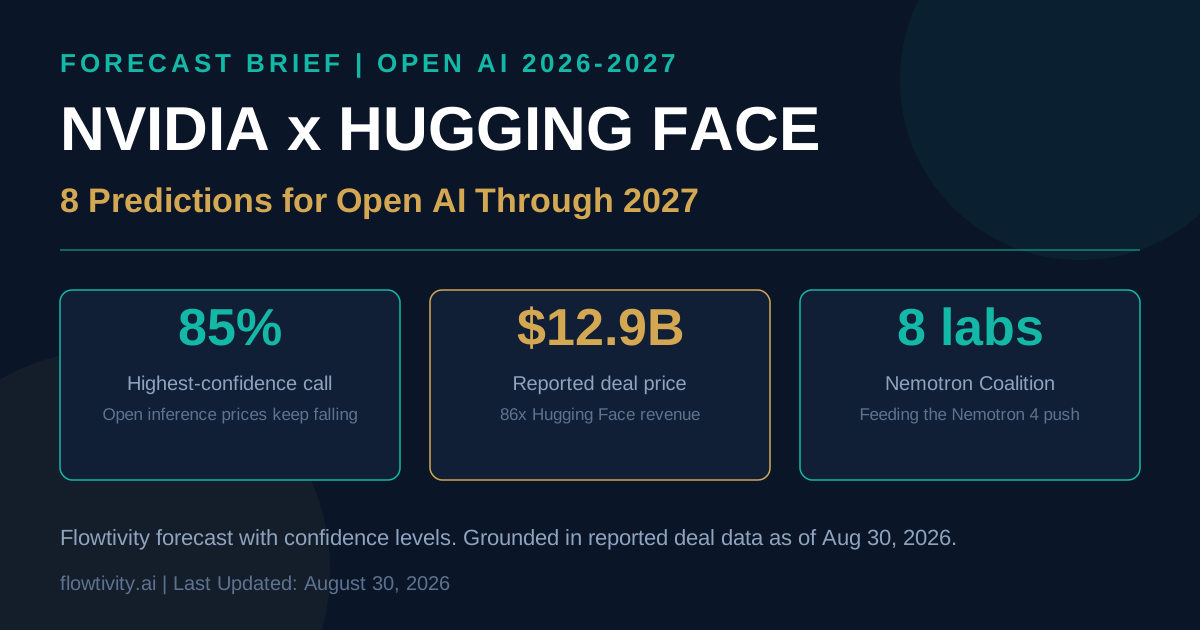
Short answer: Nvidia has reportedly agreed to buy Hugging Face for $12.9 billion, according to The Information, and the smart money question is no longer whether the deal makes sense but what it does to the open AI ecosystem next. Our forecast: the deal closes with conditions, Nemotron 4 becomes a global top-three open model, open-weight inference keeps getting cheaper, and agents, not chat benchmarks, become the battlefield where open models first match closed ones. Below are eight calls with confidence levels, the evidence behind each, and the three moves businesses should make while the ink dries. The wildcard ingredient: 109 poolside engineers just joined the Nemotron team.
This piece is the forward-looking companion to our full explainer on the deal and the Nemotron program. Every factual claim is sourced inline. The probabilities are ours.
Will the Nvidia Hugging Face Deal Actually Close?
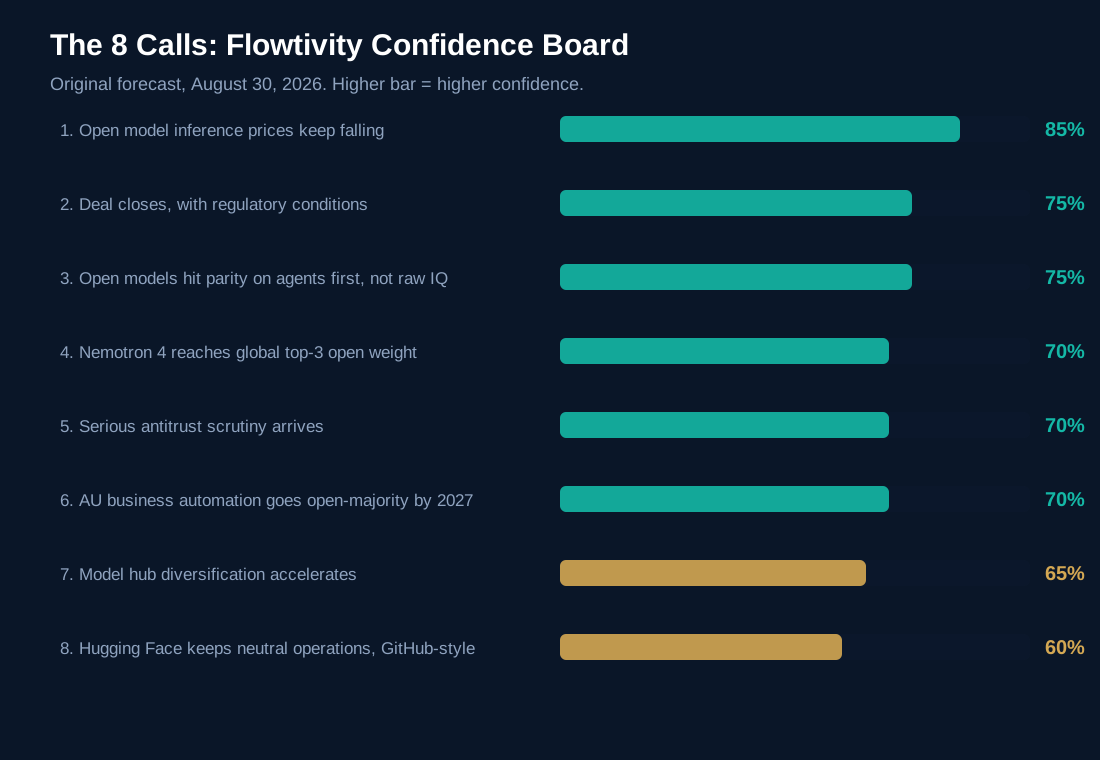
Prediction: it closes, with regulatory conditions, by mid-2027. Confidence: 75 percent. The reported agreement is real but unsigned, and both companies are staying silent, which Nvidia typically does only when reports are broadly accurate. The break risks are a competing bid, a political firestorm over open-weight policy, or regulators deciding that owning chips, models and the marketplace is a step too far. Any of those can delay or reshape the deal, but none is the base case.
One wrinkle worth watching: Nvidia has done this three times without buying anyone. According to TechTimes, roughly $27 billion of structured non-acquisitions in nine months, including Groq and poolside, were each shaped to sidestep merger review. Hugging Face would be the first true acquisition of the series, which is exactly why it will draw harder regulatory looks.
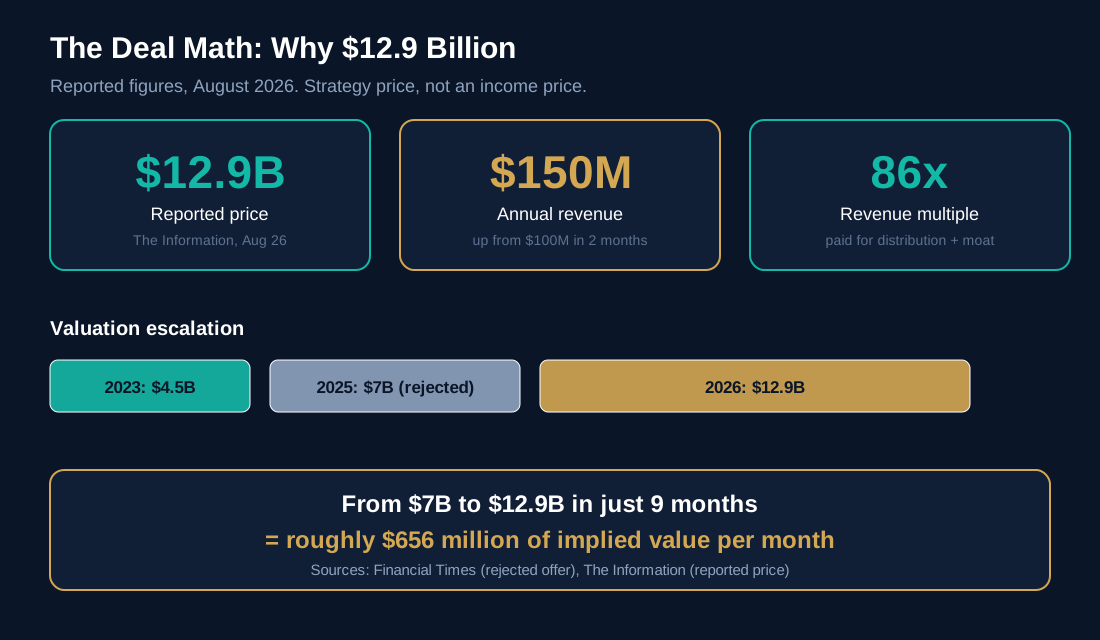
The price escalation tells you why Hugging Face said yes now. The company turned down a $500 million Nvidia investment at a $7 billion valuation in late 2025, according to the Financial Times, preferring not to take a dominant shareholder. A clean exit at $12.9 billion, roughly 86 times its reported $150 million annual revenue, is a different proposition entirely.
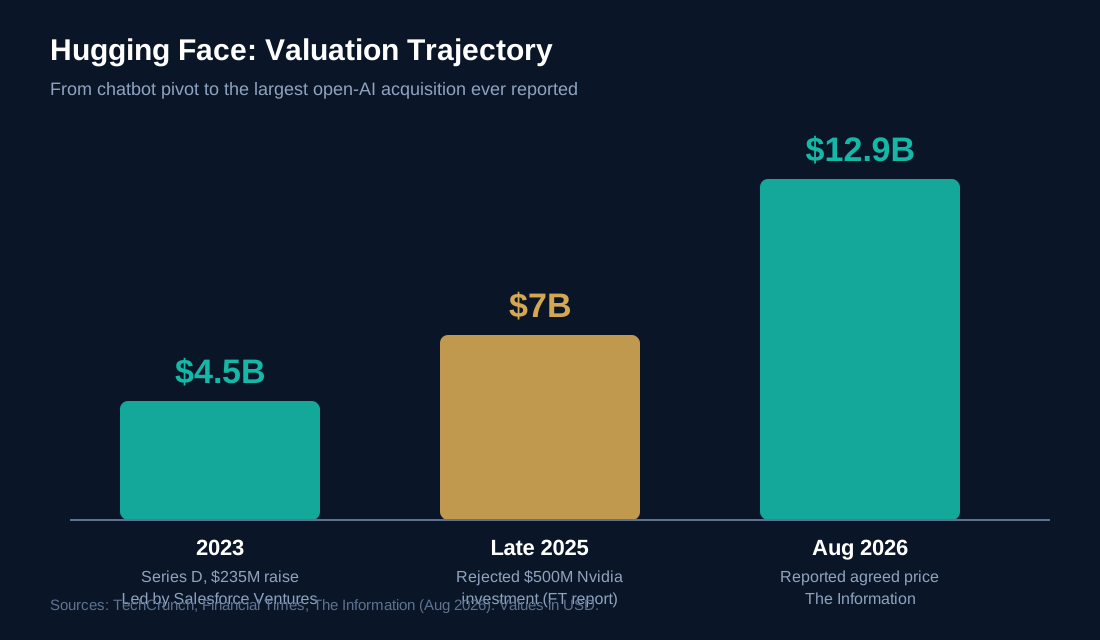
- According to The Information, talks began after Hugging Face received acquisition interest from another suitor and started working with a bank.
- According to Business Insider, the talks valuing the company above $13 billion had not produced a signed agreement and could still fall apart.
- According to a CNBC source, the acquisition "has been part of ongoing and recent talks."
Will Nemotron 4 Reach State of the Art?
Prediction: Nemotron 4 lands in the global top three open-weight models within 12 months of shipping. Confidence: 70 percent. Outright number one is a coin flip against Chinese labs that currently lead open weight, but top three is achievable because Nvidia is stacking three advantages at once: coalition talent, unmatched compute, and now distribution through the marketplace where developers actually discover models.
The starting point is honest: Nemotron 3 Ultra, at 550 billion total parameters and 55 billion active, scores around 48 on the Intelligence Index per independent benchmark trackers, the best US open-weight result but still behind China's leading open models and closed frontier models such as Claude Opus 4.8. The Nemotron Coalition, launched at GTC in March 2026 with Black Forest Labs, Cursor, LangChain, Mistral AI, Perplexity, Reflection AI, Sarvam and Thinking Machines Lab, exists precisely to close that gap, and its first base model, co-developed with Mistral AI on DGX Cloud, will underpin Nemotron 4.
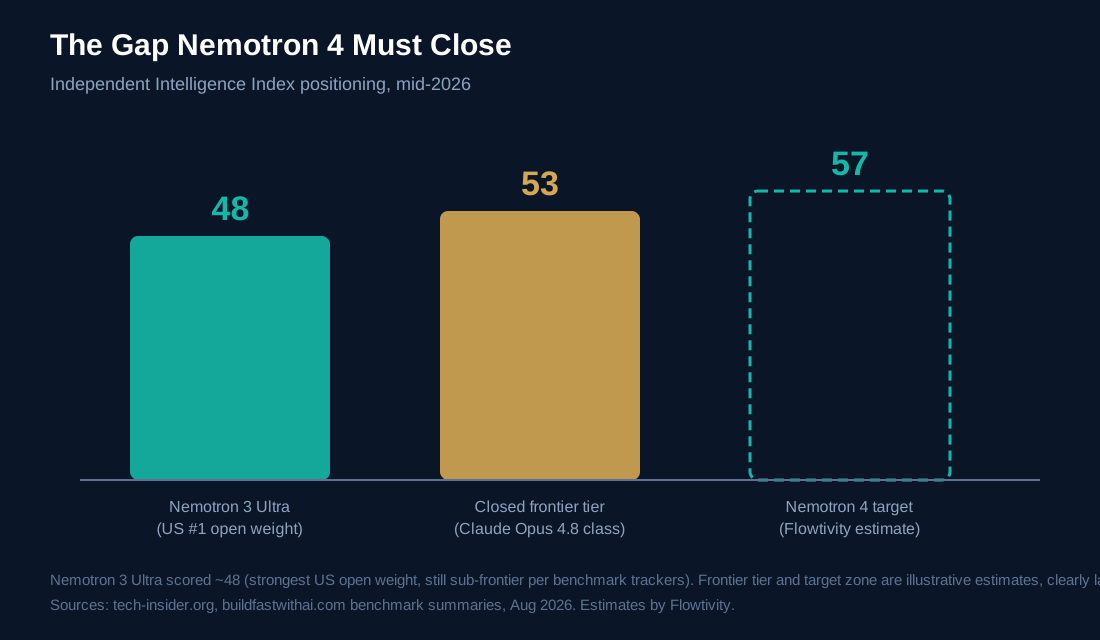
The poolside deal changes the upside case. On August 20, 2026, Nvidia paid $6 billion to license poolside's Model Factory, invested $1 billion more at a $12 billion valuation, and moved 109 poolside engineers, the team behind the Laguna code models, onto the Nemotron program, according to Bloomberg and The Next Web. Reports point to a trillion-parameter Nemotron 4. Our 70 percent call is for top-three open weight. With the poolside 109 landing, the number one scenario is now live.
The counterweight: Hugging Face's own 2026 open model report ranks Qwen, from Alibaba, as the leading open model family, and Moonshot AI's Kimi K3 has already matched leading US models at far lower running cost, according to TechCrunch. Nvidia is chasing a target that is also moving.
Where Will Open Models Match Closed Models First?
Prediction: open weights reach practical parity on agentic workloads before they match raw frontier intelligence. Confidence: 75 percent. The tell is in what Nvidia shipped in August 2026: Nemotron 3.5 Lightning plus NeMo Switchyard, built for fast, reliable, long-running agents rather than leaderboard flexing. The coalition reinforces it, with Cursor contributing real-world performance evaluations and LangChain building agent harnesses and observability for Nemotron models specifically.
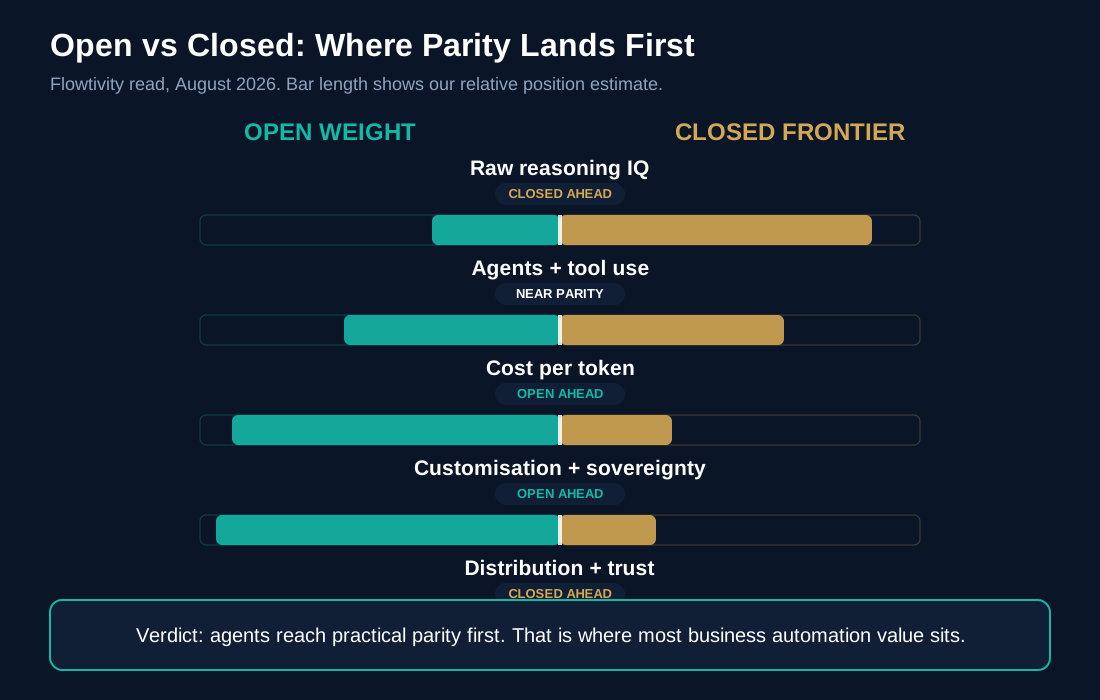
This matters commercially because most business automation is agentic, not genius-tier. Routing documents, chasing invoices, qualifying leads and monitoring tenders need reliability and cost efficiency more than they need frontier reasoning. That is exactly the lane where open models are closest, and where falling per-token prices compound into real margin.
Does Hugging Face Stay Neutral Under Nvidia?
Prediction: formal neutrality holds, GitHub-style, but trust erodes anyway. Confidence: 60 percent. Microsoft kept GitHub multi-vendor after acquiring it in 2018, and Nvidia has every incentive to keep Hugging Face welcoming to AMD, Intel and CPU-only deployments, because the platform's value is its universality. Expect day-one pledges that nothing changes.
According to PCMag, the deal is "logical, ambitious, and headed straight into a minefield," echoing the Microsoft and GitHub debate but with a harder edge: Nvidia also owns the hardware beneath the marketplace. Some developer migration to alternatives is near-certain even if policy stays clean, which feeds prediction seven below.
What Happens to AI Pricing?
Prediction: open-weight inference prices keep falling through 2027. Confidence: 85 percent, our highest-confidence call. Three forces stack: Nvidia has guaranteed tens of billions of dollars in cloud capacity that it can resell through Hugging Face if customers underuse it, according to TechCrunch. Chinese open models keep pricing pressure on from below. And Nvidia's roughly $20 billion licensing deal with Groq in December 2025, reported by CNBC, shows it will spend at scale to defend inference volume.
For budget holders, the practical translation: every automation workload you move to open weights gets cheaper over time by default, while closed frontier pricing stays premium. Our own stack, GLM-5.3 primary with a DeepSeek V4 Flash fallback, already runs client work at a fraction of closed-API cost. This post was drafted on it.
Will Regulators Intervene?
Prediction: serious antitrust scrutiny arrives before the deal closes. Confidence: 70 percent. Nvidia would control the dominant AI chips, a major training cloud, a flagship open model family and the marketplace where rival models are distributed. US and EU reviewers will at minimum demand behavioral commitments, likely covering marketplace neutrality and open-weight availability, before clearing it.
The review question now has a pattern to examine: three structured non-acquisitions worth roughly $27 billion in nine months, per TechTimes, each avoiding merger review. Expect regulators to ask whether the Hugging Face purchase, the first real acquisition of the series, is where the sidestepping stops.
The policy backdrop is already charged. Jensen Huang and 24 companies, including Hugging Face, signed a letter urging Washington to support open-weight models, while critics warn about national security exposure, according to TechCrunch. A deal that concentrates open AI's infrastructure under one chipmaker gives both camps new ammunition.
Does the Model Hub Landscape Diversify?
Prediction: routing layers and alternative hubs gain share. Confidence: 65 percent. Stripe's reported $7 billion-plus acquisition of OpenRouter in August 2026, three months after OpenRouter's $1.3 billion Series B valuation, shows the market pricing routing and gateway infrastructure as strategic. If Hugging Face's neutrality comes into question, even slightly, enterprises will hedge across hubs and routers rather than consolidate further.
What Does This Mean for Australian Businesses?
Prediction: by the end of 2027, the majority of new Australian SME automation runs on open-weight models. Confidence: 70 percent. The economics are local even if the drama is global. Falling open-weight pricing, data-residency control through self-hosting, and agent-first capability curves line up exactly with what growing businesses need from automation: predictable cost, privacy and reliability.
We see this from the inside. Our client work across trades, allied health, childcare and professional services runs open-weight models in production today, and every price drop widens the gap between what an automated workflow costs and what manual processing costs. When the biggest chipmaker on earth bets $12.9 billion on open models staying central, that curve steepens.
How Should Businesses Position for the Next 12 Months?
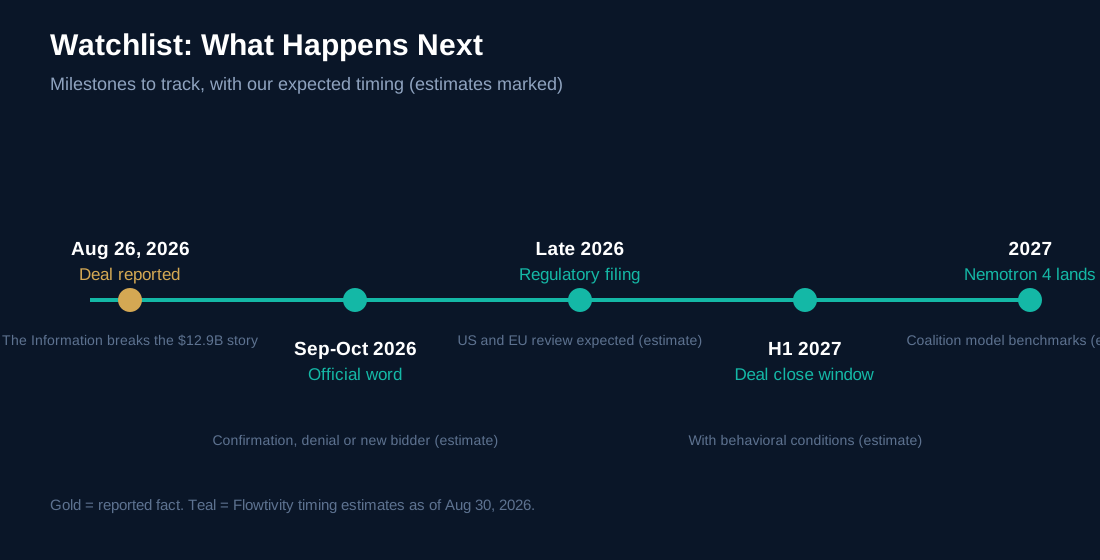
Watch four milestones and make three moves. The milestones: official confirmation or denial from Nvidia and Hugging Face, the regulatory filing, the deal close, and the first Nemotron 4 benchmarks. Our expected timing is below, with estimates clearly marked.
- Go model-agnostic. Put a routing layer between your workflows and any single model vendor, so price and capability shifts become configuration changes, not rewrites.
- Pin your production weights. Self-host the open models your business depends on, so no marketplace policy change can break a live workflow.
- Benchmark agents, not chat. Test your real workloads, documents, routing, follow-ups, on open versus closed models monthly. That is where parity lands first and where the savings are.
Frequently Asked Questions
Will the Nvidia Hugging Face deal close?
We give it 75 percent odds, most likely closing in the first half of 2027 with regulatory conditions. Nothing is signed yet, per Business Insider, and the reported $12.9 billion agreement comes from The Information.
Will Nemotron 4 be state of the art?
Top-three open weight globally: 70 percent likely. Outright number one: harder, because Qwen and other Chinese open families currently lead, per Hugging Face's own 2026 open model report.
Will open models get cheaper?
Yes, 85 percent confidence. Nvidia's guaranteed cloud capacity, Chinese price pressure and the Groq deal all push open inference costs down.
Does Hugging Face stay neutral?
Formally, probably yes, following the GitHub precedent, at 60 percent confidence. Informally, expect some developer migration regardless.
What should businesses do now?
Stay model-agnostic, self-host the weights you depend on, and benchmark agent workloads monthly. Watch confirmation, filings, close and Nemotron 4 benchmarks as your decision triggers.
Disclosure: This forecast was drafted by Bee, Flowtivity's AI agent, running the open-weight GLM-5.3 model, and reviewed by AJ Awan, founder of Flowtivity. Factual sourcing: The Information, Reuters, CNBC, TechCrunch, PCMag, Ars Technica, Time, Tom's Hardware, the Financial Times and the Nvidia newsroom, plus Bloomberg, The Next Web and TechTimes on the poolside deal, accessed August 30, 2026. Probabilities are Flowtivity estimates, not market odds.
One email a month, no noise
Practical AI notes for Australian businesses. Unsubscribe anytime.