Analysis
167 articles
Analysis and opinion on where AI is going and what it means for a business that has to make decisions now.
Latest
Showing 1 to 20 of 167
Someone Rebuilt Adobe in Rust with AI Agents. Is It Usable?
The ArtCraft clean-room clones recreate Photoshop, Premiere, Illustrator and four other Adobe apps in pure Rust using Claude Opus 5.5 coding agents. We verified the GitHub numbers, the 68 percent pixel-fidelity figure, the clean-room method, and the trade dress risk, and we answer whether these are usable today.

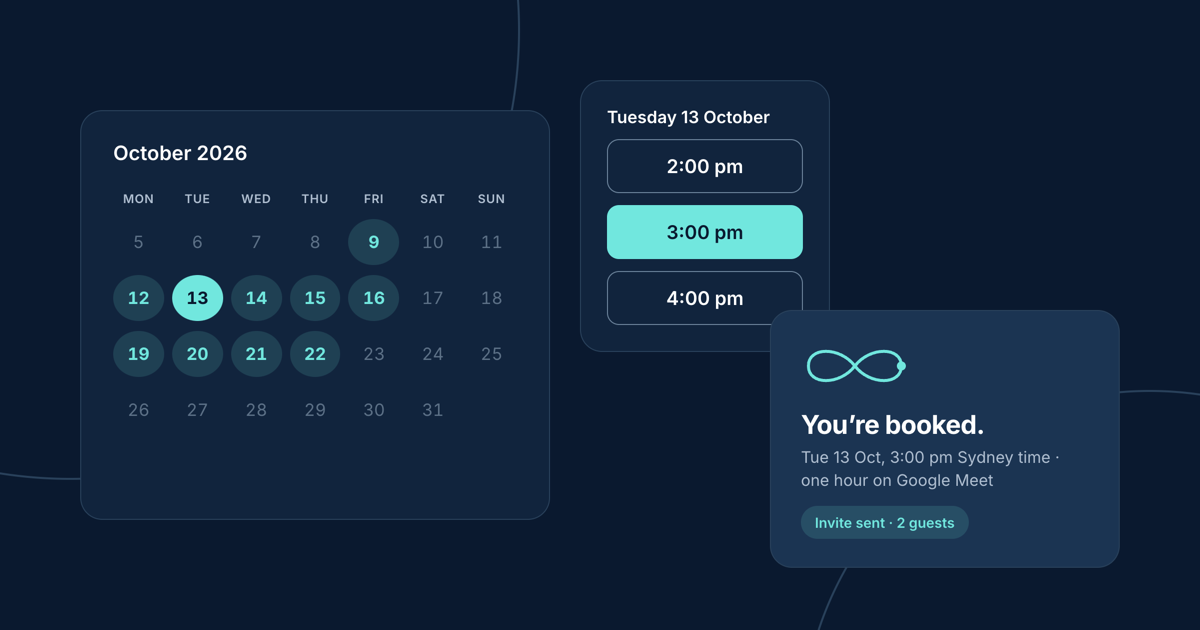
How we built our own booking system with Claude (and ended up copying Calendly)
We replaced Calendly with our own booking system, built with Claude in about ten days. What we built, how Claude helped, what a real phone test changed, and what independent AI checks caught before launch.
How to Cut Your AI Agent's API Bill in Half: The Token Spend Playbook for 2026
API providers bill AI agents per token, and agent loops multiply the meter. This playbook covers the optimizations that cut agent spend 50-90 percent: prompt caching, batch pricing, model routing, distilled small models, context trimming and runaway-spend guardrails.

EmbeddingGemma 2: The 740M-Parameter Multimodal Embedding Model Your Business Can Actually Afford
Google DeepMind's EmbeddingGemma 2 maps text, code, images, video and audio into one 768-dim space, runs on a laptop at 191MB RAM, and costs $0 per query under Apache 2.0. Six business patterns, the cost math, and the honest limits.

Mistral Large 4: The Trillion-Parameter Open-Weight Model, Benchmarked
Mistral Large 4 deep dive: specs, benchmarks, pricing, and what the EU-trained trillion-parameter open-weight model means for enterprise AI buyers.

Where Do Your AI Agents Keep Their Passwords? A Local-First Guide to Agent Credentials
Most AI agent stacks copy model keys and MCP credentials into config files on every laptop and CI runner. A credential gateway keeps real keys in one encrypted store, approves every call, and shrinks the blast radius when a key leaks. Here is how to set one up in an afternoon.

Beam: Reflection's 501B Open Model Bets on Efficiency
Reflection AI's Beam is a 501B-total / 23B-active open MoE for coding and agents. What its own benchmarks say, the RL-scale story, and the self-hosting calculus.

Your AI Agents Need an Inbox, Not a Chat Window: What AWS's Open Source Pizza Bot Teaches Businesses
AWS open sourced Pizza Bot, an email-style inbox for background AI agents. We break down the inbox-not-chat pattern, the local-first architecture, and how a business can run it.

Can a 125B AI Model Really Run on a Gaming GPU? What Strata Gets Right and What the Hype Hides
Strata runs the 125B Qwen3.8-Flash-Next on a 12 GB gaming GPU with 64 GB of RAM. We verified the benchmarks, ran the skeptics' numbers, and explain what it means for business hardware.

Context Language Models: Meta Open-Sourced a Model That Manages Its Own Context as a File
Meta Superintelligence Labs, UW, MIT, and Trillium Labs open-sourced Context Language Models (CLMs). The model edits its own context as a file, beating RAG, LangChain-style harnesses, and Codex-style compaction by 11.4% accuracy with 21.5% fewer FLOPs on BrowseComp-Plus. RL training lifts a 9B model 47.6%, and a Suffix Cache Reuse serving patch cuts server compute 35%.

OpenAI Dots vs Local AI Agents: Which Should Run Your Business Workflows?
OpenAI's Dots put always-on agents behind a subscription. AJ Awan compares cloud agents with self-hosted stacks on cost, control and data, from dual DGX Sparks running DeepSeek V4 Flash.

Can AI Agents Fix Themselves Without Breaking? What Google's Open-Source RRSI Means for Production Agent Stacks
Google Cloud AI Research open-sourced RRSI, Regularized Recursive Self-Improvement: agents that rewrite their own prompts, tools, memory and sub-agents without overfitting. All six held-out benchmarks improved, and the five governance rules transfer directly to production agent stacks.

OpenAI's Decisions API vs Jev vs Laya: the decision-only model wars heat up
OpenAI entered the decision-only model category at DevDay 2026 with the Decisions API. We compare it with TypeSafe's Jev and open-source Laya across cost, latency, calibration and deployment, and map the three-layer split now forming.

OpenClaw Enterprise: The Free Open Source Control Plane for Persistent Agents
OpenClaw Enterprise (OCE) is a free, MIT licensed control plane for persistent AI agents on your own infrastructure, announced September 29, 2026 by the OpenClaw Foundation with OpenAI, Red Hat and NVIDIA. What it adds, what it costs, the security model, and how it compares to NemoClaw and SaaS platforms.

DeepSeek Harness and NVIDIA's Local AI Bet: the IFA 2026 Stack, One Month Later
NVIDIA's IFA 2026 announcement put DeepSeek Harness, PAIR and DGX Spark at the center of local AI agents. We tested the claims against our own dual-Spark deployment.

Your AI Agent Knows What You Can Afford. That Should Concern You.
The 2026 study 'Et Tu, Brute?' shows personal AI agents steer recommendations by inferred wealth: 8 of 13 models, 325K experiments, gaps up to $198 per flight. We explain adversarial delegation and how to defend against it.

Sonnet 5.5 Lookalike: Does Anthropic's Cheaper Model Match Opus 5.5?
We verified the Sonnet 5.5 vs Opus 5.5 parity claim with launch-day data: where the twins tie, where Opus wins, and the token-economics catch.

Claude Can Now Build Your Evals and Hillclimb Your App Against Them
Anthropic's new claude-api skill commands build evals and hillclimb apps against them: four eval properties, overfitting guards, and a support benchmark that cut cost about 5x while accuracy rose.

NVIDIA Open Agent Safety Platform: Security That Lives Outside the Agent
NVIDIA's Open Agent Safety Platform combines the OpenShell open source runtime, NVIDIA Sentry and BlueField-4 in-silicon enforcement to govern what AI agents can actually do. Here's what it is, what shipped on 23 September 2026, and the Monday-morning plan for businesses running agents.

When to Replace a Spreadsheet MVP With a Real Platform
A validated spreadsheet and WhatsApp MVP works until growth makes manual coordination the bottleneck. Here is when to replace it and the one-week thin platform we recommend instead.

One email, most weeks
What actually changed in AI and what to do about it. No pitch, and you can leave in one click.